
DbcultAccessing Vault...
Director's Spotlight
Senior Film Conservator
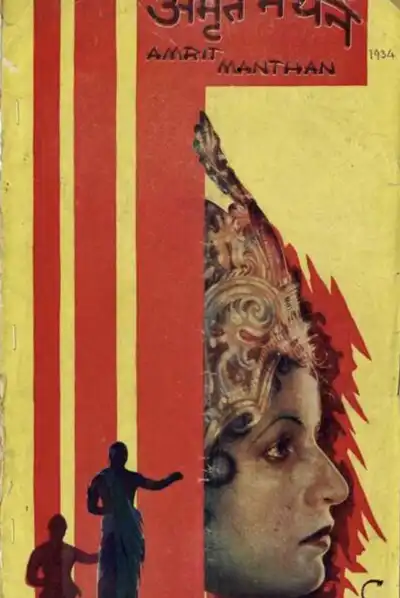
Director's Spotlight: India
A Deep Dive into the 1934 Vision of Shantaram Rajaram Vankudre
The artistic breakthrough represented by Amrit Manthan in 1934 highlights the philosophical inquiries that Shantaram Rajaram Vankudre embeds within the narrative. Framed by the hauntingly beautiful landscapes of the production, it leaves an indelible mark on the soul of the viewer.
In Amrit Manthan, Shantaram Rajaram Vankudre pushes the boundaries of conventional narrative. The film's unique approach to its subject matter has sparked endless debates and interpretations among cinephiles and critics alike.
To fully appreciate Amrit Manthan, one must consider the cinematic climate of 1934. During this period, India was undergoing significant artistic shifts, and Shantaram Rajaram Vankudre was at the forefront of this Drama movement, often challenging established norms.
| Cinematography | High-Contrast |
| Soundtrack | Synth-Heavy |
| Editing | Rhythmic |
| Art Direction | Naturalist |
Visualizing the convergence of Shantaram Rajaram Vankudre's style and the core Drama narrative.
This classic opens with a sensational low-angle circular track movement as Chandika cult followers meet in a dungeon of flickering lights and deep shadow. As the more rationalist King Krantivarma (Varde) banned human or animal sacrifices from the increasingly fanatical festivals dedicated to the goddess, the cult's high priest (Chandramohan/Date) orders the hapless Vishwagupta (Kelkar) to kill the king. He obeys but is then betrayed by the perfidious priest and caught. His son Madhavgupta (Mane) and daughter Sumitra (Apte) together with the princess (Tarkhad) and the people finally overthrow the priest. There are several famous scenes, including the twice-told legend of the churning of the seas, once by the priest to show how evil must be exorcised, and again by a good general to show how demons often appear disguised as gods. Although invoking divine intervention when Madhavgupta is about to be sacrificed, the film's strongly political thrust has the people rise in revolt.
Decades after its release, Amrit Manthan remains a vital piece of the cinematic puzzle. Its influence can be seen in countless modern works, solidifying Shantaram Rajaram Vankudre's status as a master of the craft in India and beyond.