
DbcultAccessing Vault...
Director's Spotlight
Senior Film Conservator
Director's Spotlight: India
A Deep Dive into the 1935 Vision of Shantaram Rajaram Vankudre
Analyzing Chandrasena (1935) requires a deep dive into the defining moment in Adventure history that Shantaram Rajaram Vankudre helped create. Defining a new era of India artistic expression, it transcends regional boundaries to tell a universal story.
In Chandrasena, Shantaram Rajaram Vankudre pushes the boundaries of conventional narrative. The film's unique approach to its subject matter has sparked endless debates and interpretations among cinephiles and critics alike.
While deeply rooted in India, Chandrasena has achieved a global reach, influencing directors from various backgrounds. Its ability to translate Adventure tropes into a universal cinematic language is why it remains a cult staple decades after its 1935 release.
| Cinematography | Static |
| Soundtrack | Orchestral |
| Editing | Invisible |
| Art Direction | Kitsch |
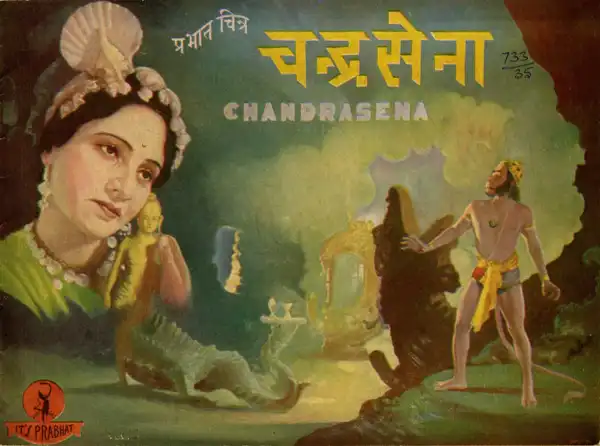
Visualizing the convergence of Shantaram Rajaram Vankudre's style and the core Adventure narrative.
This special-effects laden film is based upon an episode from the Ramayana. Indrajit, son of Ravan, initiates an attack on Rama (Mane) and Lakshmana (Kulkarni) in which they are captured by Mahi (Kelkar). They escape with the assistance of Rama's disciple, the monkey-god Hanuman (Manajirao). The narrative foregrounds Chandrasena (Tarkhad), wife of Mahi, who reveres Rama but disapproves of the bacchanalian orgies and the celebration of liquor that is the norm in his kingdom. She helps resolve the stalemate of the battle when Mahi (who can duplicate himself and his dead soldiers) proves invincible, by revealing the secret formula that will kill her husband. In addition to the usual flying figures and magic arrows mandatory for a Ramayana mythological, there is an effective scene of a gigantic Hanuman picking up a miniaturized human figure.
Decades after its release, Chandrasena remains a vital piece of the cinematic puzzle. Its influence can be seen in countless modern works, solidifying Shantaram Rajaram Vankudre's status as a master of the craft in India and beyond.