
DbcultAccessing Vault...
Director's Spotlight
Senior Film Conservator
Director's Spotlight: United States
A Deep Dive into the 1924 Vision of Stanner E.V. Taylor
Deciphering the layers of Roulette (1924) reveals a monumental shift in Drama filmmaking spearheaded by Stanner E.V. Taylor. With its avant-garde structure and atmospheric tension, offering layers of thematic complexity that demand repeated viewing.
In Roulette, Stanner E.V. Taylor pushes the boundaries of conventional narrative. The film's unique approach to its subject matter has sparked endless debates and interpretations among cinephiles and critics alike.
| Cinematography | High-Contrast |
| Soundtrack | Orchestral |
| Editing | Slow-Burn |
| Art Direction | Brutalist |
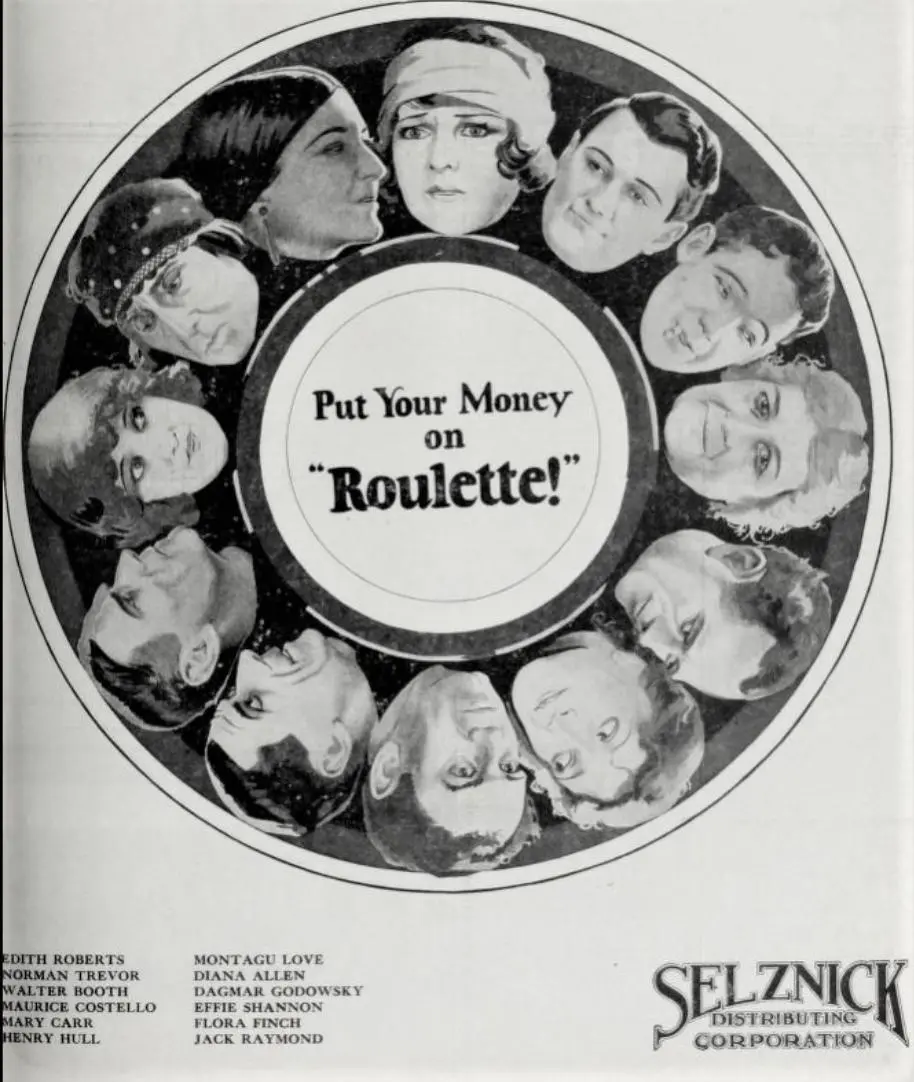
Visualizing the convergence of Stanner E.V. Taylor's style and the core Drama narrative.
Lois Carrington becomes the ward of gambler John Tralee when her father drops dead during a card game with Tralee. Tralee educates Lois and gives her a home of her own, but he uses her as a decoy in his gambling joint, where she meets Peter Marineaux. When Peter suspects that Lois helped Tralee to cheat him, she offers herself in payment. Tralee objects, but the two men play with both Lois and the money as stakes. Lois controls the roulette wheel to make Peter the winner, and they are married.
Decades after its release, Roulette remains a vital piece of the cinematic puzzle. Its influence can be seen in countless modern works, solidifying Stanner E.V. Taylor's status as a master of the craft in United States and beyond.