
DbcultAccessing Vault...
Director's Spotlight
Senior Film Conservator
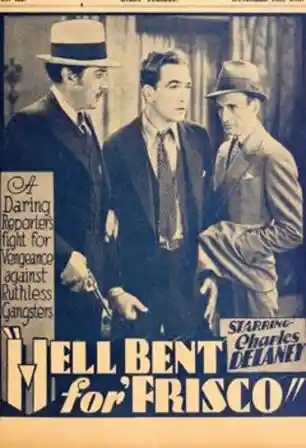
Director's Spotlight: United States
A Deep Dive into the 1931 Vision of Stuart Paton
In the grand tapestry of Romance cinema, Hell-Bent for Frisco serves as a bridge between the bold experimentation that has become synonymous with Stuart Paton. Breaking the traditional rules of Romance engagement, it highlights the importance of independent voices in United States.
In Hell-Bent for Frisco, Stuart Paton pushes the boundaries of conventional narrative. The film's unique approach to its subject matter has sparked endless debates and interpretations among cinephiles and critics alike.
In this work, Stuart Paton explores the intersection of Romance and United States cultural identity. The meticulous attention to detail suggests a deep-seated commitment to pushing the boundaries of the medium, ensuring that Hell-Bent for Frisco remains a relevant topic of study for Romance enthusiasts.
| Cinematography | Handheld |
| Soundtrack | Minimalist |
| Editing | Slow-Burn |
| Art Direction | Brutalist |
Visualizing the convergence of Stuart Paton's style and the core Romance narrative.
San Francisco newspaper reporter Jimmy Gray turns detective to bring the killer of the brother of his sweetheart, Ellen Garwood, to justice. His city editor is so confident that he will that he 'holds the presses", and then puts a stuttering man on the re-write-desk telephone.
Decades after its release, Hell-Bent for Frisco remains a vital piece of the cinematic puzzle. Its influence can be seen in countless modern works, solidifying Stuart Paton's status as a master of the craft in United States and beyond.