
DbcultAccessing Vault...
Director's Spotlight
Senior Film Conservator
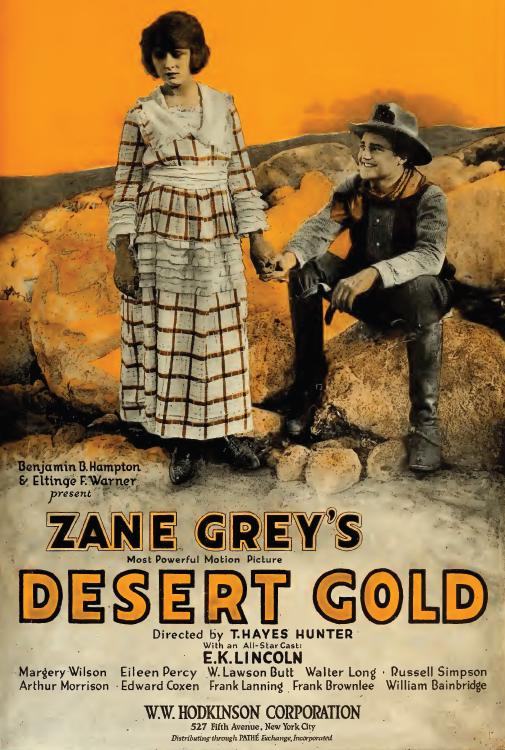
Director's Spotlight: United States
A Deep Dive into the 1919 Vision of T. Hayes Hunter
The thematic gravity of Desert Gold (1919) is rooted in the historical context that T. Hayes Hunter weaves into the cult fabric. Synthesizing the best elements of United States and international cinema, it highlights the importance of independent voices in United States.
In Desert Gold, T. Hayes Hunter pushes the boundaries of conventional narrative. The film's unique approach to its subject matter has sparked endless debates and interpretations among cinephiles and critics alike.
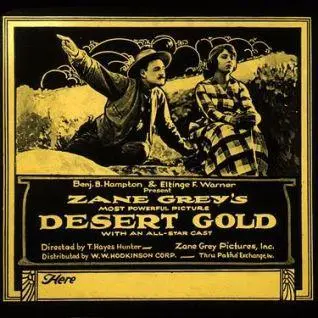
The visual language of Desert Gold is defined by its use of shadows and framing, a hallmark of T. Hayes Hunter's style. By utilizing a 1919-era palette, the film creates an immersive experience that perfectly complements its cult themes.
| Cinematography | Handheld |
| Soundtrack | Synth-Heavy |
| Editing | Rhythmic |
| Art Direction | Naturalist |
Visualizing the convergence of T. Hayes Hunter's style and the core cult narrative.
Hunting the desert for his daughter, Jonas Warren finds the man who took her away, who then produces a marriage certificate to pacify Warren's anger. After the husband finds a gold mine and uses the certificate to mark it, they die in a sandstorm. Later, Dick Gale, an Easterner in search of adventure, rescues his friend Captain George Thorne and the captain's sweetheart Mercedes Castenada from Mexican bandit Rojas. Dick takes Mercedes to Jim Belding's ranch, where Dick falls in love with Belding's adopted daughter Nell. When Rojas arrives with a band of outlaws, Dick and the ranch cowboys escort Mercedes to the mountains, led by Dick's Yaqui Indian friend. After the Yaqui throws Rojas off a cliff and locates a water source for the ranch, he shows Nell the gold mine. The marriage certificate of her parents proves that the mine is hers. Since she now knows she is not illegitimate, she can marry Dick.
Decades after its release, Desert Gold remains a vital piece of the cinematic puzzle. Its influence can be seen in countless modern works, solidifying T. Hayes Hunter's status as a master of the craft in United States and beyond.