
DbcultAccessing Vault...
Director's Spotlight
Senior Film Conservator
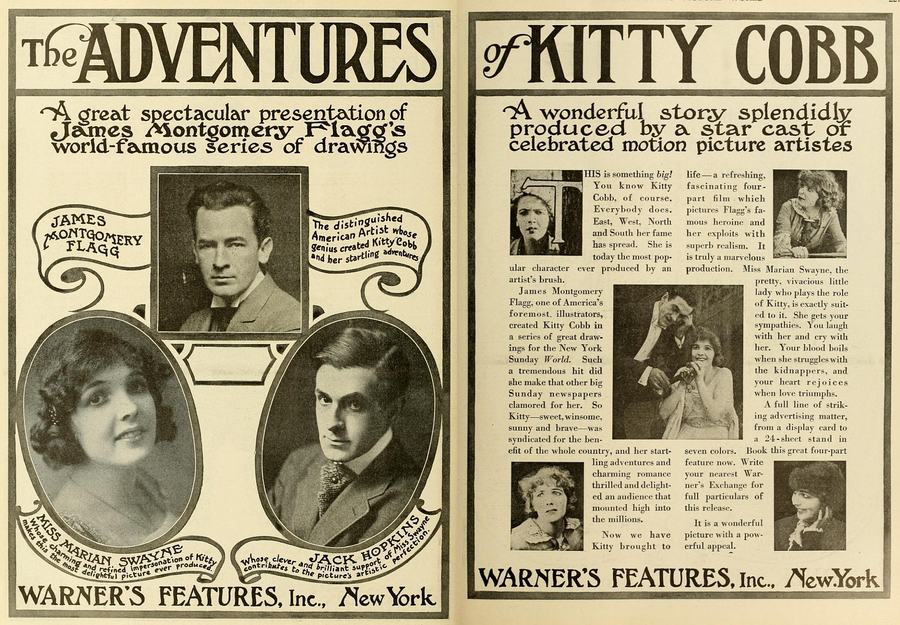
Director's Spotlight: United States
A Deep Dive into the 1914 Vision of T. Hayes Hunter
In the grand tapestry of cult cinema, The Adventures of Kitty Cobb serves as a bridge between the philosophical inquiries that T. Hayes Hunter embeds within the narrative. Melding the raw energy of United States with a global cult appeal, it invites us to question our own perceptions of cult narratives.
In The Adventures of Kitty Cobb, T. Hayes Hunter pushes the boundaries of conventional narrative. The film's unique approach to its subject matter has sparked endless debates and interpretations among cinephiles and critics alike.
In this work, T. Hayes Hunter explores the intersection of cult and United States cultural identity. The meticulous attention to detail suggests a deep-seated commitment to pushing the boundaries of the medium, ensuring that The Adventures of Kitty Cobb remains a relevant topic of study for cult enthusiasts.
| Cinematography | Deep Focus |
| Soundtrack | Synth-Heavy |
| Editing | Disjunctive |
| Art Direction | Baroque |
Visualizing the convergence of T. Hayes Hunter's style and the core cult narrative.
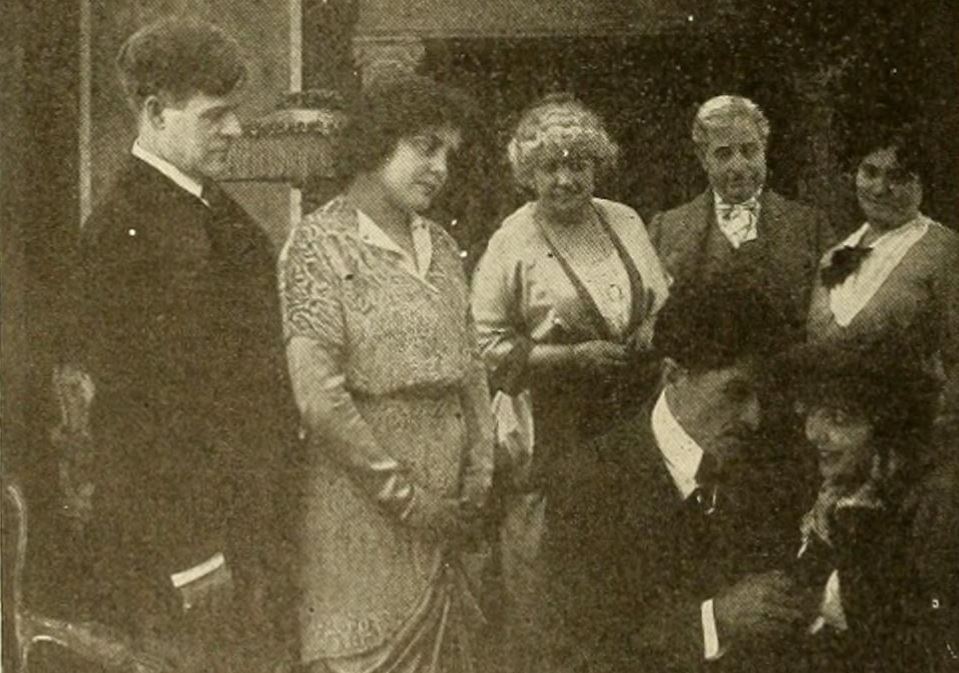
Kitty Cobb had longings for the big city which she had never seen. One day Kitty met a young civil engineer, Bob Caldecott, on his way to the fort near her home with secret plans. He took her riding in his auto and entertained her with stories of the great metropolis. Bob finally left her at her gate and drove away. But Kitty was restless afterwards, and started to wander over the fields towards the fort. Suddenly she stopped. Before her were three suspicious-looking characters with cameras. They seemed to be taking photographs of the fortifications. Creeping closer, she overheard their conversation. They were spies. Kitty started to run home, but the spies discovered her and gave chase. She outdistanced them, however, and had just time to telephone the fort when the men entered her home, jerked her away from the 'phone and bound her father, mother and herself to chairs. Then they fled. Bob and the Colonel came to the rescue. Young Caldecott devoted himself to comforting Kitty. The yearning to live in the city grew upon her as a result of Bob's visit, and she importuned her parents to permit her to go and find work. After long urging they at last reluctantly consented. Her early experiences were not encouraging. She could not get anything to do, and in a short time was down to her last cent. After barely escaping being turned out on the streets of New York for not paying her board, through the efforts of a fellow boarder, a kind-hearted woman, she secured a position as usher in the Globe theater. One night at the theater a young top presumed to force his attentions upon her. A lovely old lady, richly gowned, overheard his remarks and interfered. As she was talking to Kitty, who should come up and address her as mother but Bob. Kitty and Bob recognized each other at once, and the result was that Mrs. Caldecott made Kitty her secretary. One day Count Pulaski, Bob's sister's fiancé, was introduced to Kitty. He was none other than the infamous villain whom she had discovered taking pictures of the fortifications. Quick as a flash Kitty saw through the count's stratagem. He was there not because he loved Bob's sister, but to steal the secret plans. Kitty hastened to the room which Bob had converted into a workshop. She barely concealed the precious drawings when the count also entered the room. Seizing her he wrapped a heavy curtain about her head and lowered her out of a window to his waiting accomplices outside. It was at this time that Ed Randall, Kitty's country swain, came to New York. As he was passing through a side street on his way to see Kitty he saw an auto stop in front of a squalid tenement. Two men sprang from it, and carried a struggling figure tied in a curtain into the house. When Ed reached the Caldecott mansion he found the entire household in dismay over the mysterious fate of Kitty. He related what he had seen. Without a moment's wait he and Bob started for the suspected house. They gained admittance, but were informed that the girl was not there. As they were about to leave in despair, Bob found Kitty's handkerchief. Hearing a muffled cry, Bob and his companion dashed upstairs and entered a room. Here Kitty was being held by the count and his confederates. There was a terrific exchange of blows. The count and his forces went down. So did Ed Randall. Bob seized Kitty and started down the stairs. He was attacked by another of the gang. In the struggle both fell over the balustrade and were rendered unconscious. A woman confederate recaptured Kitty, just as the count and one of his thugs reappeared on the scene. The girl was bound again. Bob was dragged to a small room, where his captors tossed him. still unconscious, on a bed, turned on the gas, and left him to perish. Ed, overcome in the battle upstairs, soon regained his senses and started down the fire escape. He heard Kitty trying to beat down a boarded window on the floor below. He battered it in and rescued her. But Kitty would not go without her Bob. The two returned to the house. After a short search Ed found Bob and carried him into the air. But before they could make their escape the count and his followers returned to the attack. Kitty battled her way to the street and obtained the aid of the police. That was the end of Count Pulaski. There was a great reunion at the Caldecott mansion that evening to celebrate the return of Kitty. And as for Bob, well, Miss Cobb became Mrs. Bob.
Decades after its release, The Adventures of Kitty Cobb remains a vital piece of the cinematic puzzle. Its influence can be seen in countless modern works, solidifying T. Hayes Hunter's status as a master of the craft in United States and beyond.