
DbcultAccessing Vault...
Director's Spotlight
Senior Film Conservator
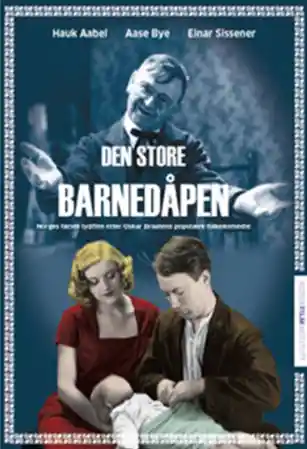
Director's Spotlight: Norway
A Deep Dive into the 1931 Vision of Tancred Ibsen
As we revisit the 1931 masterpiece Den store barnedåpen, we are struck by the atmospheric immersion that Tancred Ibsen achieves throughout Den store barnedåpen. Exploring the nuances of the human condition with Drama flair, it solidifies Tancred Ibsen's reputation as a master of the craft.
In Den store barnedåpen, Tancred Ibsen pushes the boundaries of conventional narrative. The film's unique approach to its subject matter has sparked endless debates and interpretations among cinephiles and critics alike.
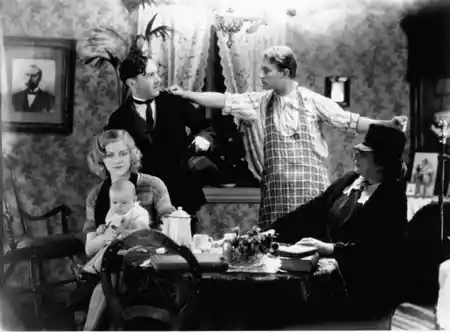
The visual language of Den store barnedåpen is defined by its use of shadows and framing, a hallmark of Tancred Ibsen's style. By utilizing a 1931-era palette, the film creates an immersive experience that perfectly complements its Drama themes.
| Cinematography | Static |
| Soundtrack | Orchestral |
| Editing | Invisible |
| Art Direction | Kitsch |
Visualizing the convergence of Tancred Ibsen's style and the core Drama narrative.
Den arbeidsløsa Harald får bo hos dobbelt-Petra, hvor også Alvilde bor med sitt barn som hun har med en sjøgutt som stakk av. Harald treffer sjøgutten og denger ham opp. Harald har trodd han ikke kan arbeide, men oppdager nå at han er frisk og sterk. Alvilde blir forelsket i ham. De gifter seg samtidig som barnet blir døpt sammen med alle andre "løsunger" som en fanatisk kapellan har holdt borte fra kirken, men som kirketjener Evensen har så meget til overs for.
Decades after its release, Den store barnedåpen remains a vital piece of the cinematic puzzle. Its influence can be seen in countless modern works, solidifying Tancred Ibsen's status as a master of the craft in Norway and beyond.