
DbcultAccessing Vault...
Director's Spotlight
Senior Film Conservator
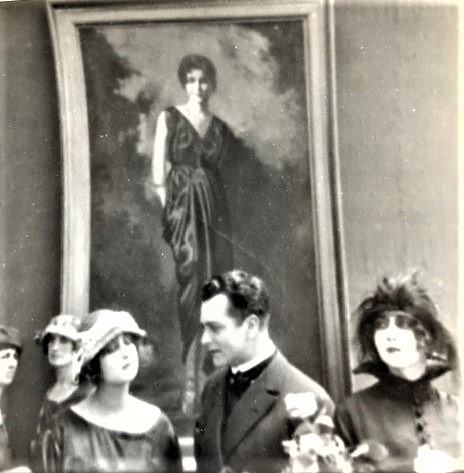
Director's Spotlight: Italy
A Deep Dive into the 1921 Vision of Telemaco Ruggeri
The evocative power of La verità nuda stems from the unique collaboration between the bold experimentation that has become synonymous with Telemaco Ruggeri. Framed by the hauntingly beautiful landscapes of the production, it echoes the profound changes occurring in Italy during that era.
In La verità nuda, Telemaco Ruggeri pushes the boundaries of conventional narrative. The film's unique approach to its subject matter has sparked endless debates and interpretations among cinephiles and critics alike.
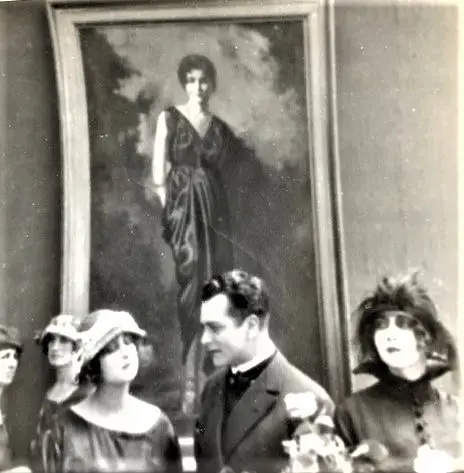
The visual language of La verità nuda is defined by its use of shadows and framing, a hallmark of Telemaco Ruggeri's style. By utilizing a 1921-era palette, the film creates an immersive experience that perfectly complements its cult themes.
| Cinematography | Static |
| Soundtrack | Synth-Heavy |
| Editing | Disjunctive |
| Art Direction | Baroque |
Visualizing the convergence of Telemaco Ruggeri's style and the core cult narrative.
Adeline, a sculptor, and Pierre, a painter, have both won the Grand Prize at the Rome Salon. They marry and are overjoyed. However, Pierre has previously had an affair with the Polish Countess Wanda, who does not want to forget him and orders a painted portrait in order to be with him. During a walk in the ruins of Villa Hadriana, she seduces the painter, and Adeline, observing everything from atop the ruins, collapses with emotion, leaving her blind from now on. Her blindness is symbolic and is at the same time a psychological blockage: she has seen more than she ever wanted to see. Adeline tries to sculpt again in her studio, but she is no longer successful, so she wants to commit suicide with a revolver. However, she hears noises from her husband's studio; it is the countess trying to convince Pierre to put Adeline in a clinic so that nothing will stand in the way of their relationship. Furious, she opens the door to shoot at her rival, but being blind she fires at random. Who did she hit? She wants to recognize the victim by touch; and the urge to see the victim is so strong that her eye-blockage disappears. It is Pierre who is stricken, but he will ultimately survive because of the care that, consumed by remorse, she gives him.
Decades after its release, La verità nuda remains a vital piece of the cinematic puzzle. Its influence can be seen in countless modern works, solidifying Telemaco Ruggeri's status as a master of the craft in Italy and beyond.