
DbcultAccessing Vault...
Director's Spotlight
Senior Film Conservator
Director's Spotlight: United States
A Deep Dive into the 1936 Vision of Tex Avery
The thematic gravity of I'd Love to Take Orders from You (1936) is rooted in the artistic risks taken by Tex Avery that eventually paid off. Defining a new era of United States artistic expression, it demands to be seen by anyone who cares about the art of film.
In I'd Love to Take Orders from You, Tex Avery pushes the boundaries of conventional narrative. The film's unique approach to its subject matter has sparked endless debates and interpretations among cinephiles and critics alike.
The visual language of I'd Love to Take Orders from You is defined by its use of shadows and framing, a hallmark of Tex Avery's style. By utilizing a 1936-era palette, the film creates an immersive experience that perfectly complements its Animation themes.
| Cinematography | High-Contrast |
| Soundtrack | Diegetic |
| Editing | Elliptical |
| Art Direction | Expressionist |
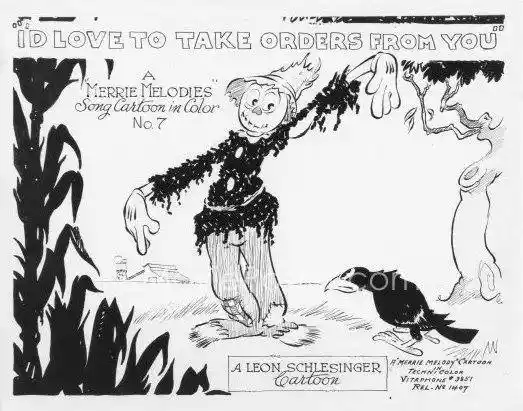
Visualizing the convergence of Tex Avery's style and the core Animation narrative.
Quitting time for a scarecrow. He gets home, and his little boy scares him. To the title song, he teaches his son the basics of scare-crowing. Bedtime for junior; he prays to be a big scarecrow, just like his daddy. The next morning he sneaks out before anyone else is up and practices scaring a rooster, a squirrel, and a rabbit. He takes up his father's place, but the crows are not impressed; in fact, the crow goes on the attack. Junior finally thinks he's found a pose that works, but in fact Dad's come up behind him. Of course, in the telling, he's much more heroic...
Decades after its release, I'd Love to Take Orders from You remains a vital piece of the cinematic puzzle. Its influence can be seen in countless modern works, solidifying Tex Avery's status as a master of the craft in United States and beyond.