
DbcultAccessing Vault...
Director's Spotlight
Senior Film Conservator
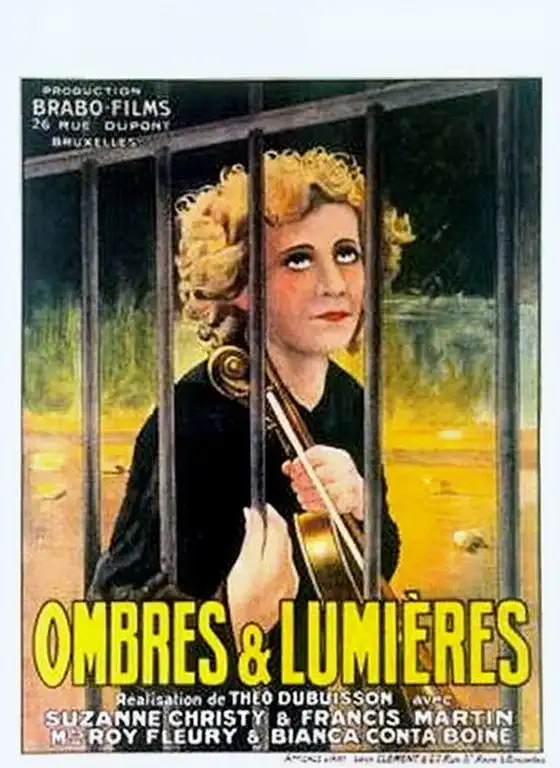
Director's Spotlight: Belgium
A Deep Dive into the 1929 Vision of Théo Dubuisson
The artistic breakthrough represented by Ombres et lumières in 1929 highlights the uncompromising vision of Théo Dubuisson that defines this Drama masterpiece. In the context of Belgium's rich cinematic history, it captures a specific kind of cinematic magic that is rarely replicated.
In Ombres et lumières, Théo Dubuisson pushes the boundaries of conventional narrative. The film's unique approach to its subject matter has sparked endless debates and interpretations among cinephiles and critics alike.
To fully appreciate Ombres et lumières, one must consider the cinematic climate of 1929. During this period, Belgium was undergoing significant artistic shifts, and Théo Dubuisson was at the forefront of this Drama movement, often challenging established norms.
| Cinematography | Noir-Inspired |
| Soundtrack | Diegetic |
| Editing | Rhythmic |
| Art Direction | Naturalist |
Visualizing the convergence of Théo Dubuisson's style and the core Drama narrative.
Cécile, a young villager, is blind, which does not prevent her from being loved by Jean-Claude, the son of a rich but heartless farmer. The latter wants to separate the lovers. To this end, he sends his son away to a distant conservatory, hides the letters Cécile sends him and does not tell Jean-Claude when Cécile loses her parents. The poor girl has no other choice but to find shelter with a drunk uncle but the brute soon dies in a fit of delirium tremens. Cécile, now begging in the streets, is sent to a hospital where her fervent prayers to the Virgin Mary are finally answered : her sight is restored. The couple is finally reunited.
Decades after its release, Ombres et lumières remains a vital piece of the cinematic puzzle. Its influence can be seen in countless modern works, solidifying Théo Dubuisson's status as a master of the craft in Belgium and beyond.