
DbcultAccessing Vault...
Director's Spotlight
Senior Film Conservator
Director's Spotlight: United States
A Deep Dive into the 1914 Vision of Theodore Wharton
In the storied career of Theodore Wharton, A Change of Heart stands as a the atmospheric immersion that Theodore Wharton achieves throughout A Change of Heart. Reflecting the political and social shifts of the 1914s, it reinforces the idea that cinema is a medium of infinite possibilities.
In A Change of Heart, Theodore Wharton pushes the boundaries of conventional narrative. The film's unique approach to its subject matter has sparked endless debates and interpretations among cinephiles and critics alike.
To fully appreciate A Change of Heart, one must consider the cinematic climate of 1914. During this period, United States was undergoing significant artistic shifts, and Theodore Wharton was at the forefront of this cult movement, often challenging established norms.
| Cinematography | Static |
| Soundtrack | Orchestral |
| Editing | Slow-Burn |
| Art Direction | Brutalist |
Visualizing the convergence of Theodore Wharton's style and the core cult narrative.
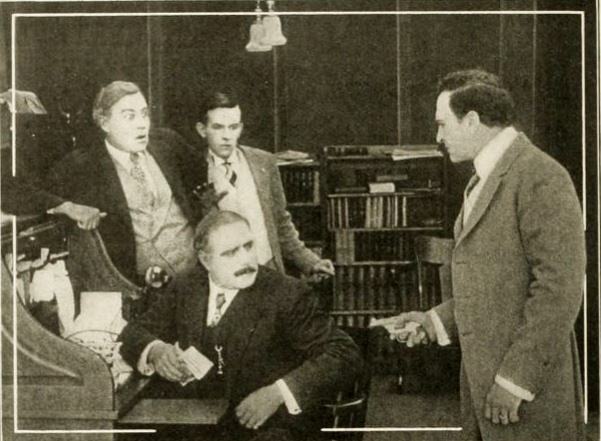
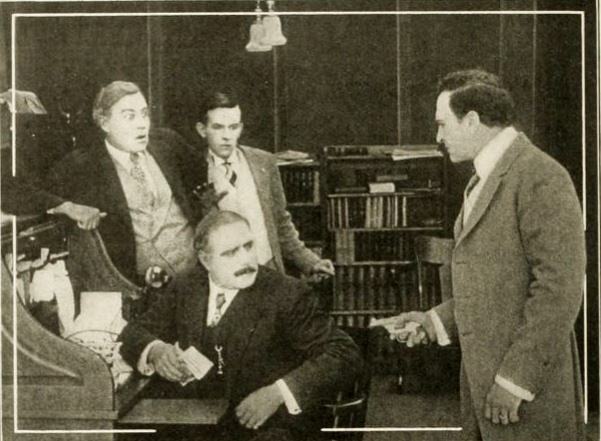
James Mason has fallen in with bad companions and becomes known to the police as "Handsome Harry." He has just finished a five-year term in prison. Though inclined to reform, he listens to the plea of his pals and consents to renew operations. Under the name of the Morgan Syndicate they carry on their "get-rich-quick" business. The police receive complaints concerning the syndicate. They decide to change the name to the National Investment Company, and offer new inducements. Thus they send out accounts of their oil properties and the large profits which may be expected. Helen Lewis, an elderly widow in the country, who has five thousand dollars, receives one. She writes the confidence men that she is interested and is coming to the city. She requests one of them to meet her at the station. Mason is delegated by his pals to meet her. The unsophisticated woman falls an easy prey to the bunco men and gives them her five thousand dollars and receives certificates of stock. She sees in Mason's watch a photograph of an elderly woman. He tells her it is a picture of his mother who died ten years before. The old lady tells Mason it is too bad that his mother is dead since she would have been proud of her boy. This penetrates the bunco man's conscience and in a flash he sees himself as he is. Going into his partners' office he begs them to give him back the money they have taken. They laugh him to scorn. He escorts Mrs. Lewis back to the station and sees her off. On the way back to his office he determines to be through with the shady business. He again demands the money and when they refuse, he takes it by force. A fight follows, in which he is the victor. He takes the next train for Mrs. Lewis' home that night. She is surprised to see him. Determined to make a clean breast of it, he asks for her stock which he tears up. He tells her the stock is worthless and that the National Investment Company is made up of a gang of crooks, of whom he is one. He goes back to the railroad station but discovers his capital is represented by a few pennies. Further search discloses the fact that Mrs. Lewis has slipped a bill of large denomination in bis vest pocket. He puts the money in an envelope, and mails it to her. Empty of pocket, but high of purpose, he sets off for the city on foot.
Decades after its release, A Change of Heart remains a vital piece of the cinematic puzzle. Its influence can be seen in countless modern works, solidifying Theodore Wharton's status as a master of the craft in United States and beyond.