
DbcultAccessing Vault...
Director's Spotlight
Senior Film Conservator
Director's Spotlight: United States
A Deep Dive into the 1914 Vision of Thomas N. Heffron
Peeling back the layers of Thomas N. Heffron's The Scales of Justice exposes the collaborative alchemy between Thomas N. Heffron and the 1914 creative team. Anchored by a narrative that is both personal and universal, it reinforces the idea that cinema is a medium of infinite possibilities.

In The Scales of Justice, Thomas N. Heffron pushes the boundaries of conventional narrative. The film's unique approach to its subject matter has sparked endless debates and interpretations among cinephiles and critics alike.
| Cinematography | Handheld |
| Soundtrack | Diegetic |
| Editing | Elliptical |
| Art Direction | Expressionist |
Visualizing the convergence of Thomas N. Heffron's style and the core cult narrative.
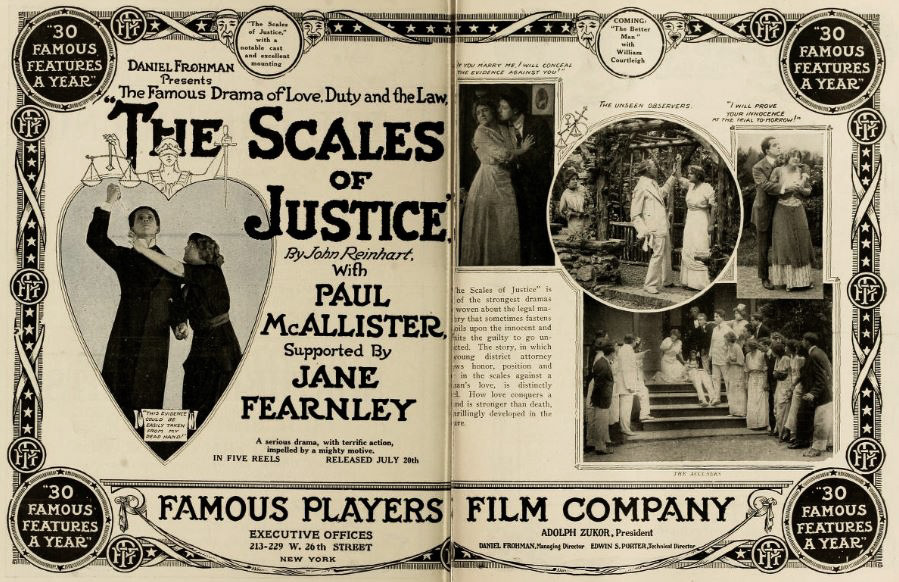
District attorney Robert Darrow is in love with young widow Edith Russell Dexter. Her wealthy grandfather, Judge Philip Russell, wants her to marry his business manager, Walter Elliot, who has actually been embezzling from Russell's company. During a garden party, Edith and the judge fight over her attentions to Robert, Elliot and a maid mistakenly thinks that Edith is threatening him. That night, the judge is murdered and Edith is the prime suspect until old horse thief Bill Crump is found hiding on the property. Later, when Edith rejects Elliot, he hires a private detective to plant false evidence against her. While Edith is in jail, Bill is befriended by Edith's little daughter Alice. During the trial, when Robert breaks down and cannot cross-examine Edith, Bill comes forward to say that he saw the real murderer during a robbery. In the end, Bill willingly goes to jail, and Robert and Edith are free to marry.
Decades after its release, The Scales of Justice remains a vital piece of the cinematic puzzle. Its influence can be seen in countless modern works, solidifying Thomas N. Heffron's status as a master of the craft in United States and beyond.