
DbcultAccessing Vault...
Director's Spotlight
Senior Film Conservator
Director's Spotlight: United States
A Deep Dive into the 1917 Vision of Thomas R. Mills
In the storied career of Thomas R. Mills, A Night in New Arabia stands as a the atmospheric immersion that Thomas R. Mills achieves throughout A Night in New Arabia. Reflecting the political and social shifts of the 1917s, it reinforces the idea that cinema is a medium of infinite possibilities.
In A Night in New Arabia, Thomas R. Mills pushes the boundaries of conventional narrative. The film's unique approach to its subject matter has sparked endless debates and interpretations among cinephiles and critics alike.
To fully appreciate A Night in New Arabia, one must consider the cinematic climate of 1917. During this period, United States was undergoing significant artistic shifts, and Thomas R. Mills was at the forefront of this cult movement, often challenging established norms.
| Cinematography | Handheld |
| Soundtrack | Experimental |
| Editing | Invisible |
| Art Direction | Kitsch |
Visualizing the convergence of Thomas R. Mills's style and the core cult narrative.
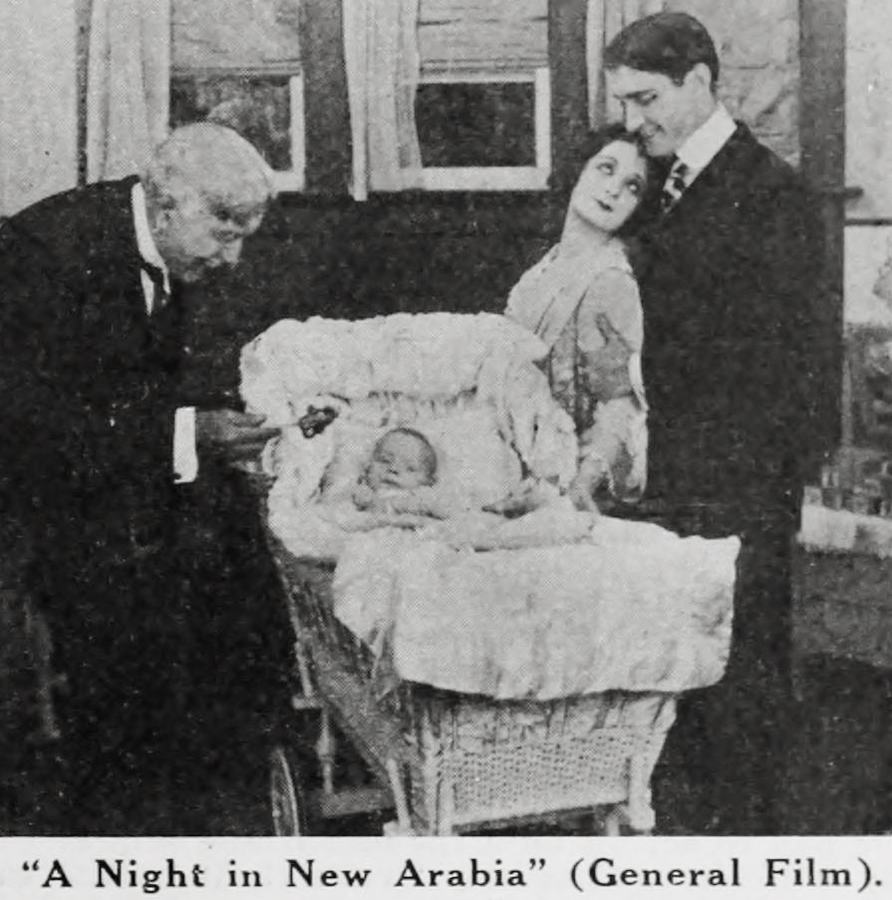
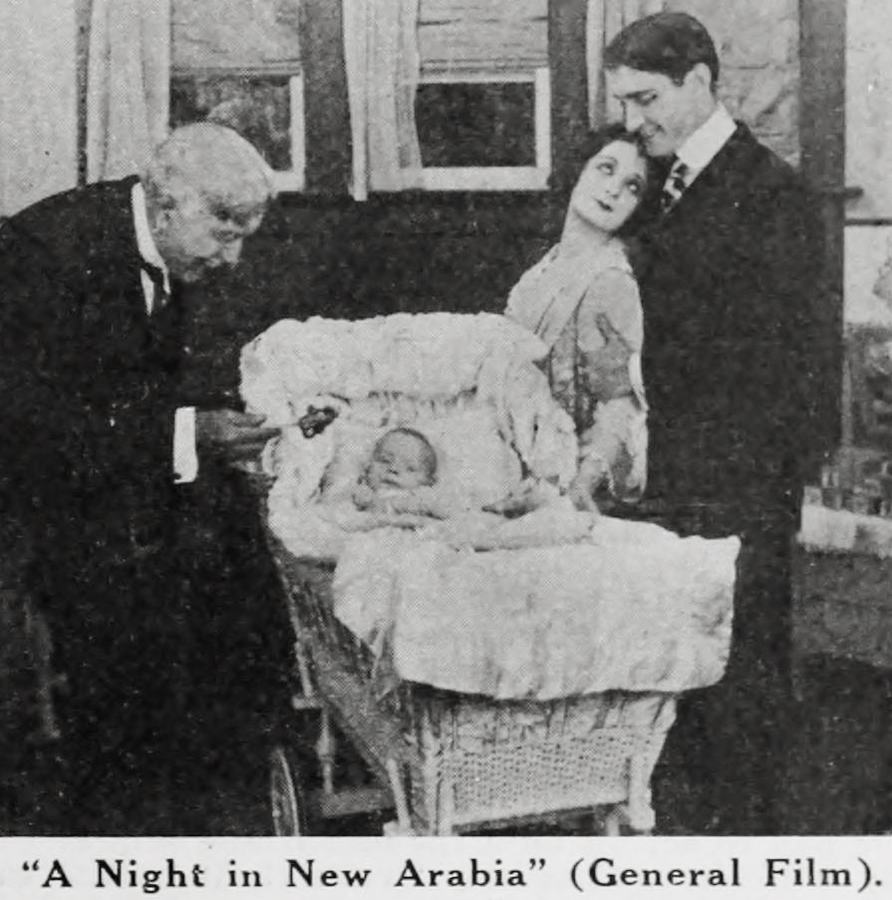
Jacob Spraggins, veteran general of a breaker-boy-to-multi-millionaire campaign, is driven by a troublesome conscience into the ranks of the amateur Haroun al Raschids, who infest Bagdad-on-the-Subway. Donations to hospitals, charities and universities fail to bring him happiness. At last he traces his uneasiness to a piece of legitimate business whereby he swindled one McLeod out of property worth ten thousand dollars. Detectives find the grandson of McLeod, a delivery youth for a large provision store. To him old man Spraggins hands ten thousand dollars in bills. Impressed by the young man's insouciant independence, the money monarch makes further advances, even hints at the possibility of matrimony between McLeod and his daughter, Celia. But Thomas McLeod is already engaged to a parlor maid at a house on his round. Neither he nor Spraggins has any idea that the parlor maid is Celia, who has fallen in love with Thomas's whistling. She whistles, and the accomplishment has helped her from the social life of her father's financial class. Aided and abetted by Annette McCorkle, the romantic housemaid, Celia has donned cap and apron and set out to be loved for herself alone. She has succeeded. So the ten thousand dollar benefaction, having brought peace to the soul of the Caliph, proceeds to bring happiness to McLeod and Celia as well, for their financial way to elopement is now clear, and they go. Mr. Spraggins gives chase, but, recognizing the prospective bridegroom, adds his blessing. It would seem so far that this one benefaction had failed to harm the Caliph-ridden populace of New Arabia. However, a year later old Jacob Spraggins orders all his donations to charities canceled. The working girls can continue to work for all he cares. The sun must shine on the Sunshine Fund without the aid of his money. Celia has a child. The child, Jakey, must have an unprecedented fortune by the time he attains twenty-one. So Mr. Spraggins raises the price of all vinegar three cents. Moving Picture World, November 3, 1917
Decades after its release, A Night in New Arabia remains a vital piece of the cinematic puzzle. Its influence can be seen in countless modern works, solidifying Thomas R. Mills's status as a master of the craft in United States and beyond.