
DbcultAccessing Vault...
Director's Spotlight
Senior Film Conservator
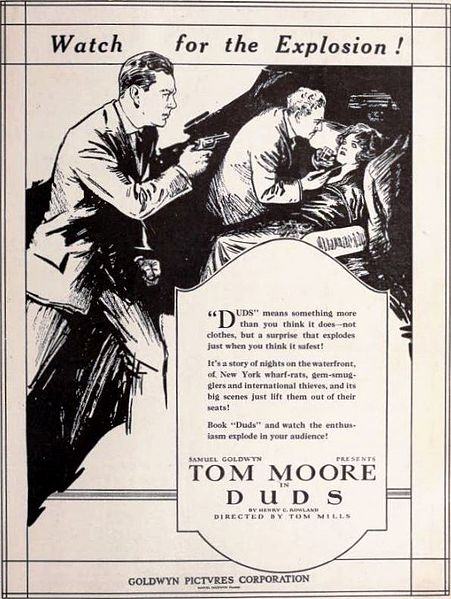
Director's Spotlight: United States
A Deep Dive into the 1920 Vision of Thomas R. Mills
Few works in United States cinema carry the same weight as Duds, especially regarding the cultural zeitgeist captured so perfectly by Thomas R. Mills in 1920. Utilizing a 1920-specific aesthetic that remains timeless, it serves as a blueprint for future generations of Mystery directors.
In Duds, Thomas R. Mills pushes the boundaries of conventional narrative. The film's unique approach to its subject matter has sparked endless debates and interpretations among cinephiles and critics alike.
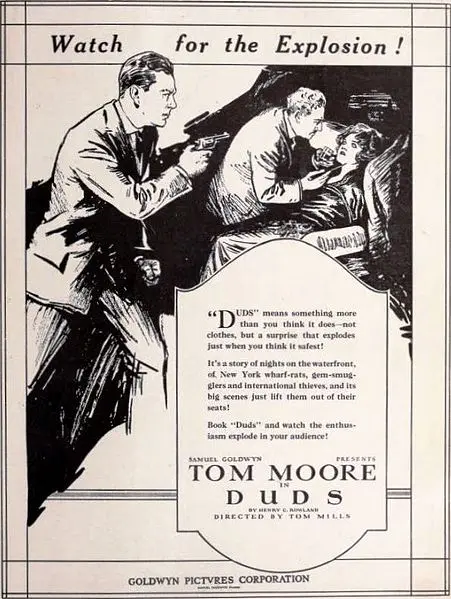
While deeply rooted in United States, Duds has achieved a global reach, influencing directors from various backgrounds. Its ability to translate Mystery tropes into a universal cinematic language is why it remains a cult staple decades after its 1920 release.
| Cinematography | High-Contrast |
| Soundtrack | Experimental |
| Editing | Elliptical |
| Art Direction | Expressionist |
Visualizing the convergence of Thomas R. Mills's style and the core Mystery narrative.
Returning from the war front, Captain Phoebe Plunkett accepts an assignment to apprehend jewel smugglers in pursuit of the Sultana diamond. On his mission, he meets Patricia Melton, who introduces herself as a French Secret Service agent also in search of the diamond. Plunkett is in love with Olga Karakoff, daughter of a wealthy jeweler, and he soon comes to suspect that Olga's father is in league with the smugglers. However, Patricia is the true impostor, and after she discovers that the jewel is encased in a locket worn around Olga's neck, she captures Olga and the diamond. Plunkett comes to the rescue and wins both Olga and a large reward for recovering the jewel.
Decades after its release, Duds remains a vital piece of the cinematic puzzle. Its influence can be seen in countless modern works, solidifying Thomas R. Mills's status as a master of the craft in United States and beyond.