
DbcultAccessing Vault...
Director's Spotlight
Senior Film Conservator
Director's Spotlight: United States
A Deep Dive into the 1918 Vision of Thomas R. Mills
The cult DNA of The Seal of Silence is a reflection of United States's the subversive storytelling techniques employed by Thomas R. Mills in 1918. Breaking the traditional rules of cult engagement, it leaves an indelible mark on the soul of the viewer.
In The Seal of Silence, Thomas R. Mills pushes the boundaries of conventional narrative. The film's unique approach to its subject matter has sparked endless debates and interpretations among cinephiles and critics alike.
While deeply rooted in United States, The Seal of Silence has achieved a global reach, influencing directors from various backgrounds. Its ability to translate cult tropes into a universal cinematic language is why it remains a cult staple decades after its 1918 release.
| Cinematography | Deep Focus |
| Soundtrack | Orchestral |
| Editing | Slow-Burn |
| Art Direction | Brutalist |
Visualizing the convergence of Thomas R. Mills's style and the core cult narrative.
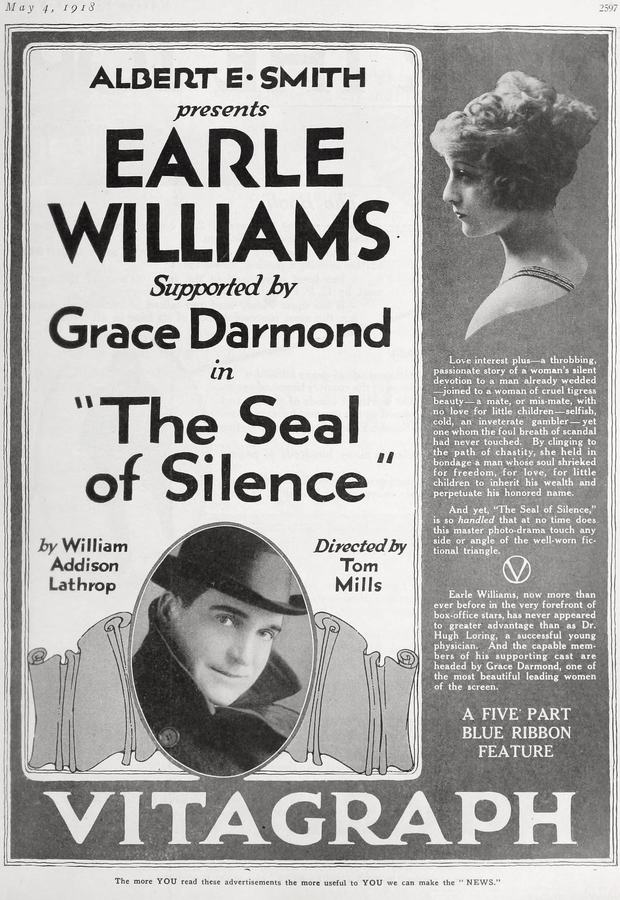
Dr. Hugh Loring, whose hobby is heredity, has evolved the theory that physical or mental peculiarities of children reveal the parents. The doctor's intense desire for children is only equaled by his wife's aversion. On the occasion of the doctor admonishing his wife for being friendly with an admirer she leaves him, and when her child is born she swears Ruth Carden, an employee of her husband's, who has accompanied her, to secrecy, so that she may keep from the doctor his greatest joy. Mrs. Loring dies, and Ruth returns to the doctor's office, leaving the child in the care of the nurse. Three years later the nurse finds it necessary to give up the child, and the doctor, who has fallen in love with Ruth, is stunned, for he believes that the child is hers. Dr. Loring subsequently learns that the child is his, and he and Ruth are married.
Decades after its release, The Seal of Silence remains a vital piece of the cinematic puzzle. Its influence can be seen in countless modern works, solidifying Thomas R. Mills's status as a master of the craft in United States and beyond.