
DbcultAccessing Vault...
Director's Spotlight
Senior Film Conservator
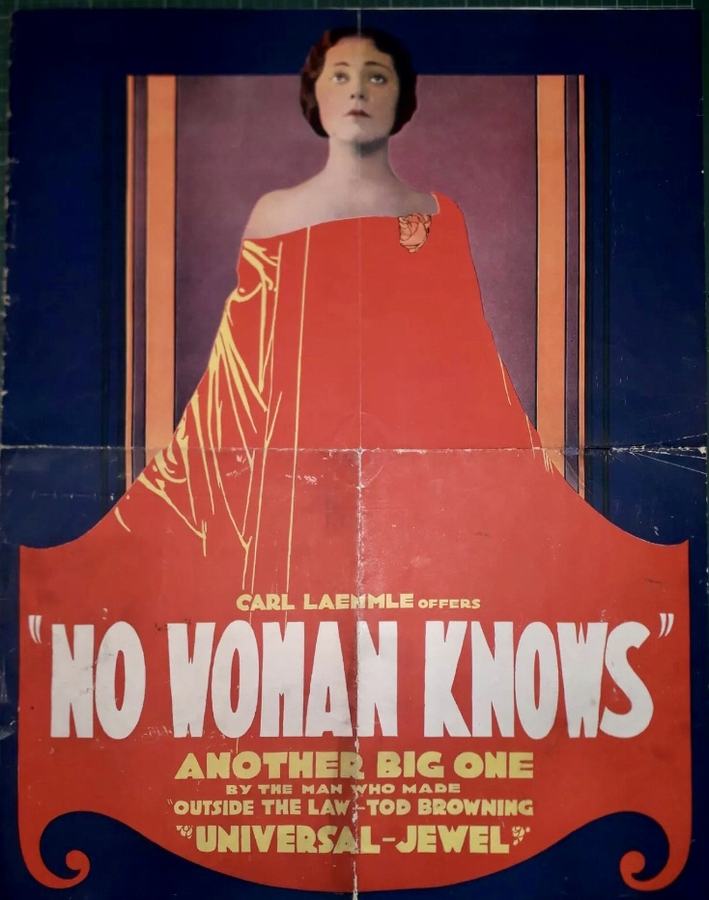
Director's Spotlight: United States
A Deep Dive into the 1921 Vision of Tod Browning
Peeling back the layers of Tod Browning's No Woman Knows exposes the collaborative alchemy between Tod Browning and the 1921 creative team. Anchored by a narrative that is both personal and universal, it reinforces the idea that cinema is a medium of infinite possibilities.
In No Woman Knows, Tod Browning pushes the boundaries of conventional narrative. The film's unique approach to its subject matter has sparked endless debates and interpretations among cinephiles and critics alike.
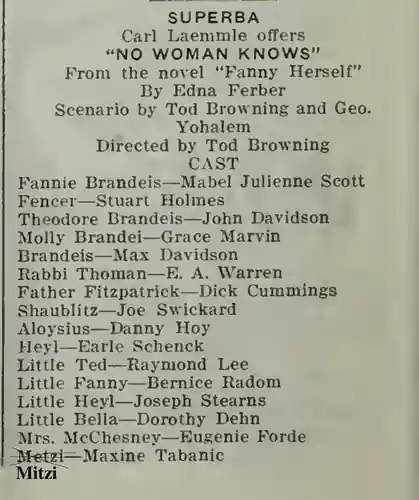
In this work, Tod Browning explores the intersection of Drama and United States cultural identity. The meticulous attention to detail suggests a deep-seated commitment to pushing the boundaries of the medium, ensuring that No Woman Knows remains a relevant topic of study for Drama enthusiasts.
| Cinematography | Handheld |
| Soundtrack | Experimental |
| Editing | Elliptical |
| Art Direction | Expressionist |
Visualizing the convergence of Tod Browning's style and the core Drama narrative.
In Winnebago, Wisconsin, the Jewish Brandeis family--Molly, Ferdinand, and their two children Fanny and Theodore--run a modest dry-goods store. Theodore is studying violin and auditions for a famous violinist, The Great Schabelitz, who is giving a local concert. Schabelitz is impressed by the boy's talent and recommends that he plan to study in Dresden, Germany. After Ferdinand dies, the family makes many sacrifices to enable Theodore to study in Dresden, where he eventually marries a worthless chorus girl and causes his mother's death from a broken heart. Although she continues to contribute to Theodore's support, Fanny decides to live her own life and moves to Chicago. There she becomes a highly-efficient businesswoman in a department store, spurred on by her colleague and admirer Michael Fenger, who is trapped in a loveless marriage. A former school friend, Clarence Hyle, also attempts to woo her. Later, Theodore, deserted by his wife, returns from Europe with his baby daughter and comes to live with Fanny. When he eventually becomes a successful performer, he leaves Fanny a message saying that he is returning to his wife. After so much self-sacrifice, Fanny decides to live only for herself and is about to sail to Honolulu with Fenger when Clarence makes her realize that her true happiness lies with him.
Decades after its release, No Woman Knows remains a vital piece of the cinematic puzzle. Its influence can be seen in countless modern works, solidifying Tod Browning's status as a master of the craft in United States and beyond.