
DbcultAccessing Vault...
Director's Spotlight
Senior Film Conservator
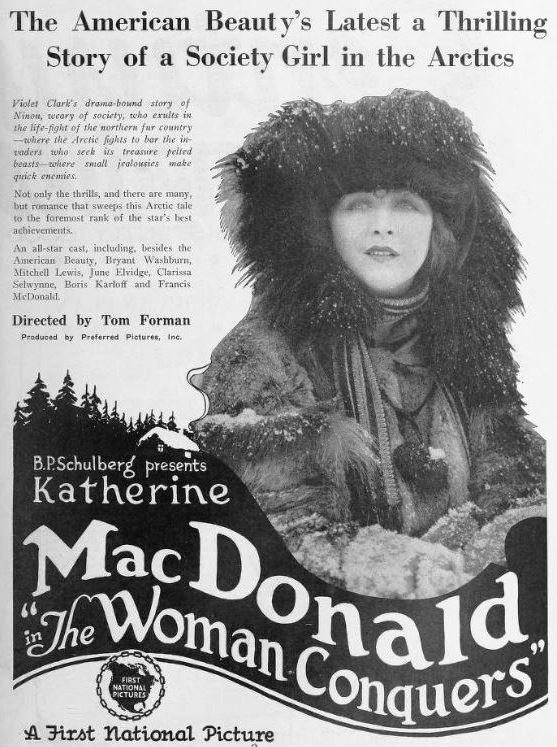
Director's Spotlight: United States
A Deep Dive into the 1922 Vision of Tom Forman
Few works in United States cinema carry the same weight as The Woman Conquers, especially regarding the technical innovation that Tom Forman introduced to the Drama format. Subverting the expectations of the typical 1922 audience, it bridges the gap between traditional Drama and contemporary vision.
In The Woman Conquers, Tom Forman pushes the boundaries of conventional narrative. The film's unique approach to its subject matter has sparked endless debates and interpretations among cinephiles and critics alike.

To fully appreciate The Woman Conquers, one must consider the cinematic climate of 1922. During this period, United States was undergoing significant artistic shifts, and Tom Forman was at the forefront of this Drama movement, often challenging established norms.
| Cinematography | High-Contrast |
| Soundtrack | Orchestral |
| Editing | Slow-Burn |
| Art Direction | Brutalist |
Visualizing the convergence of Tom Forman's style and the core Drama narrative.
Tired of her friends and life as a society leader, Ninon Le Compte goes north to the Hudson Bay area to inspect trapping holdings inherited from her uncle. Frederick Van Court, who frequently proposes to her, and Flora O'Hare accompany her. Lazar, the Canadian manager of the post, openly desires both the company and Ninon for himself and sets fire to the warehouse when Ninon sends him away. When Ninon, Frederick, and Lawatha catch up with Lazar, he makes advances to Ninon; Frederick defends her and is seriously hurt. Lazar and Lawatha kill each other, and Ninon and Frederick survive the difficult return journey to find a happy future.
Decades after its release, The Woman Conquers remains a vital piece of the cinematic puzzle. Its influence can be seen in countless modern works, solidifying Tom Forman's status as a master of the craft in United States and beyond.