
DbcultAccessing Vault...
Director's Spotlight
Senior Film Conservator
Director's Spotlight: Japan
A Deep Dive into the 1933 Vision of Torajirō Saitō
The thematic gravity of Wasei Kingu Kongu (1933) is rooted in the historical context that Torajirō Saitō weaves into the Horror fabric. Synthesizing the best elements of Japan and international cinema, it highlights the importance of independent voices in Japan.
In Wasei Kingu Kongu, Torajirō Saitō pushes the boundaries of conventional narrative. The film's unique approach to its subject matter has sparked endless debates and interpretations among cinephiles and critics alike.
While deeply rooted in Japan, Wasei Kingu Kongu has achieved a global reach, influencing directors from various backgrounds. Its ability to translate Horror tropes into a universal cinematic language is why it remains a cult staple decades after its 1933 release.
| Cinematography | Deep Focus |
| Soundtrack | Orchestral |
| Editing | Slow-Burn |
| Art Direction | Brutalist |
Visualizing the convergence of Torajirō Saitō's style and the core Horror narrative.
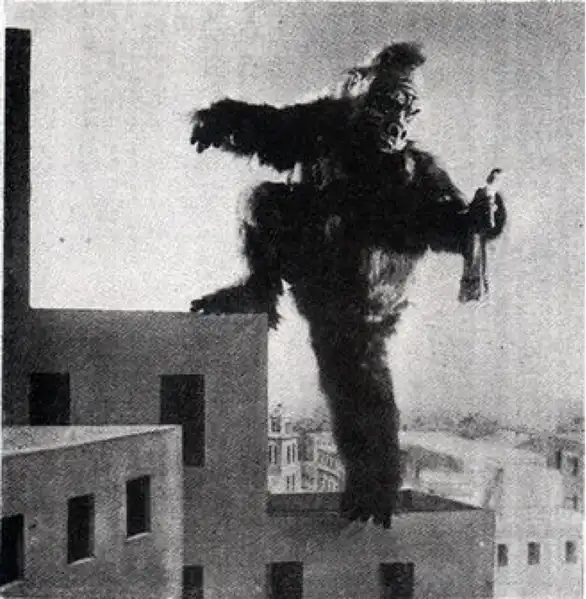
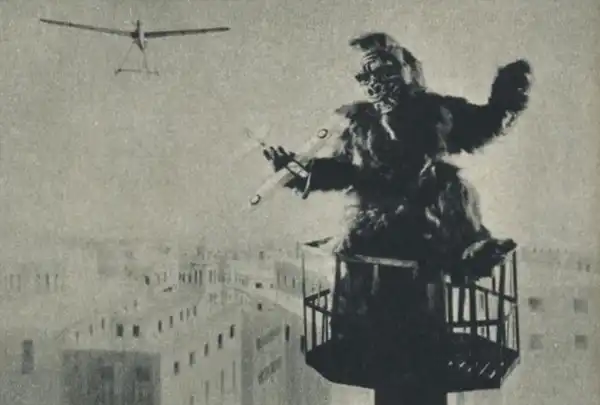
The character "Santa" is a vagabond whose main source of income is locating lost coins on the streets of Tokyo. He is dating the pretty girl Omitsu, but her father Seizo does not consider him suitable for becoming his son-in-law. Seizo breaks-up their relationship and finds a new, wealthy boyfriend for Omitsu. Santa figures that he needs money to regain his girlfriend, and starts desperately seeking for a job. But nobody is willing to hire him. Noticing that the foreign-import film "King Kong" is a box office hit, Santa offers to dress up as King to promote a movie theater that is playing this film. He is hired on a try-out basis. Santa starts regularly appearing as King Kong in theaters, and goes on staged rampages against miniature buildings. During one of his performances, he notices Omitsu with her new boyfriend. Blinded by rage, Santa goes on a real rampage and chases after the man, both inside and outside the theatre. Santa beats up the man and leaves his unconscious body on the streets. But the audience thinks that his rampage was part of the performance and they are enthusiastic about it. He gets offered a higher salary for repeat performances, and he now has enough money to gain Seizo's approval and to start dating Omitsu again.
Decades after its release, Wasei Kingu Kongu remains a vital piece of the cinematic puzzle. Its influence can be seen in countless modern works, solidifying Torajirō Saitō's status as a master of the craft in Japan and beyond.