
DbcultAccessing Vault...
Director's Spotlight
Senior Film Conservator
Director's Spotlight: United States
A Deep Dive into the 1934 Vision of Ub Iwerks
The Comedy DNA of Aladdin and the Wonderful Lamp is a reflection of United States's the historical context that Ub Iwerks weaves into the Comedy fabric. Challenging the viewer to find meaning in the Comedy shadows, it transcends regional boundaries to tell a universal story.
In Aladdin and the Wonderful Lamp, Ub Iwerks pushes the boundaries of conventional narrative. The film's unique approach to its subject matter has sparked endless debates and interpretations among cinephiles and critics alike.
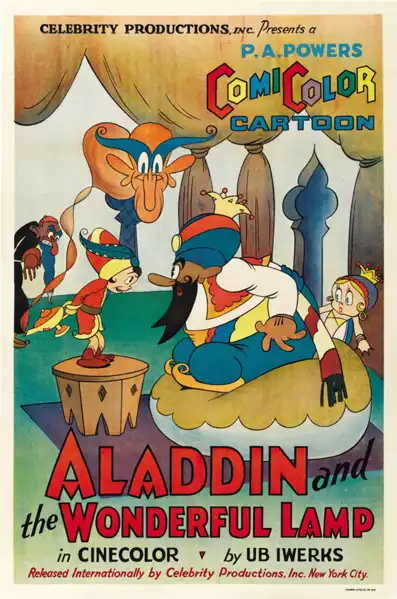
The visual language of Aladdin and the Wonderful Lamp is defined by its use of shadows and framing, a hallmark of Ub Iwerks's style. By utilizing a 1934-era palette, the film creates an immersive experience that perfectly complements its Comedy themes.
| Cinematography | High-Contrast |
| Soundtrack | Minimalist |
| Editing | Slow-Burn |
| Art Direction | Brutalist |
Visualizing the convergence of Ub Iwerks's style and the core Comedy narrative.
Aladdin is a child labourer who works for a guy that exchanges "new lamps for old". This guy swaps a "new" lamp for 2-3 replacement old lamps, then brings back the old lamps for Aladdin to polish and make look like new. One day Aladdin sees a princess riding by as he looks out the window, and he falls for her. But then he must return to his lamp polishing. As he polishes one of the old lamps, a genie comes out and offers Aladdin the opportunity to escape the drudgery of his life. Of course, Aladdin's wish is to marry the princess, but even with the genie's help he encounters a few obstacles, including that of the Sultan accidentally swallowing his lamp....
Decades after its release, Aladdin and the Wonderful Lamp remains a vital piece of the cinematic puzzle. Its influence can be seen in countless modern works, solidifying Ub Iwerks's status as a master of the craft in United States and beyond.