
DbcultAccessing Vault...
Director's Spotlight
Senior Film Conservator
Director's Spotlight: Italy
A Deep Dive into the 1913 Vision of Ubaldo Maria Del Colle
The artistic breakthrough represented by The Heart of a Police Officer in 1913 highlights the uncompromising vision of Ubaldo Maria Del Colle that defines this cult masterpiece. In the context of Italy's rich cinematic history, it captures a specific kind of cinematic magic that is rarely replicated.
In The Heart of a Police Officer, Ubaldo Maria Del Colle pushes the boundaries of conventional narrative. The film's unique approach to its subject matter has sparked endless debates and interpretations among cinephiles and critics alike.
While deeply rooted in Italy, The Heart of a Police Officer has achieved a global reach, influencing directors from various backgrounds. Its ability to translate cult tropes into a universal cinematic language is why it remains a cult staple decades after its 1913 release.
| Cinematography | High-Contrast |
| Soundtrack | Diegetic |
| Editing | Rhythmic |
| Art Direction | Naturalist |
Visualizing the convergence of Ubaldo Maria Del Colle's style and the core cult narrative.
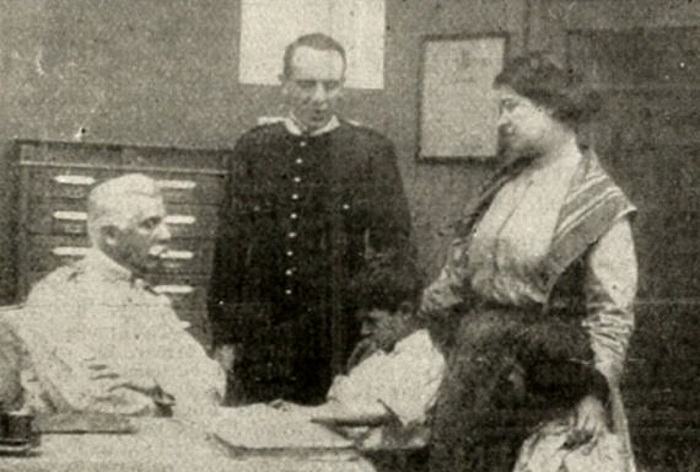
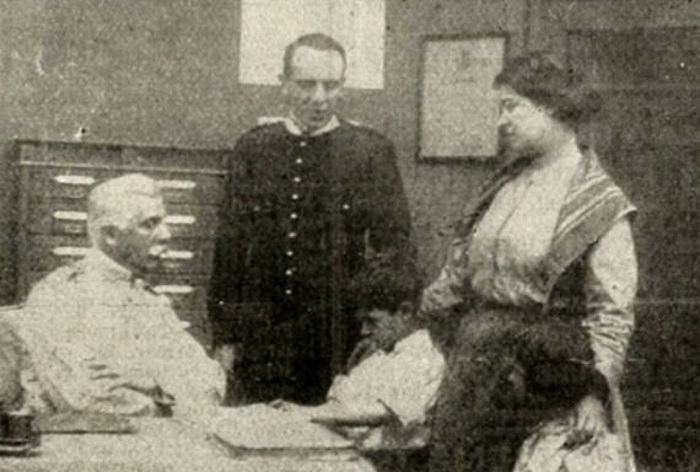
Frank Canti, a professional hunter, has had a very bad season. Winter is approaching, and with an old father and two sick children on his hands, he has no money to buy food or medicine. The proprietor of the only hotel in the village, meets him, and tells him that he must have a couple of wild ducks for a banquet, and offers him a large stipend for securing them for him. Canti realizes that the only place to get them is on the preserves, closed to the layman, and to get them he would have to trespass. He is sorely tempted, but refuses. He returns home and is confronted by the doctor, who insists that the child receive the medicine prescribed, so he returns to the proprietor of the hotel and accepts an advance from him, the balance to be paid on the delivery of the ducks. He goes to the Count's grounds, shoots a duck, and is immediately caught by the keeper of the grounds, who is in love with his wife. He is hailed to the police court, where the keeper swears to a charge of trespassing against him. The penalty for the offense is 300 francs, or one month in jail. Police Officer Moretti's term of three years is practically over. During this time he has saved 300 francs, which he has placed in an envelope, and intends using same as a wedding gift to his bride. The hunter's wife calls on him for advice, he having a reputation for big-heartedness, but he advises her that nothing can be done, and takes her to the lieutenant, thinking possibly that he might see a way out of the dilemma, but, instead, the lieutenant confirms what he has already said. He, too, is extremely warm-hearted and generous, and as soon as the hunter's wife departs, gives the policeman five francs to take to her. The hunter is allowed three days in which to decide whether he must serve his term in prison. The time having expired and the fine not paid, Moretti is given a warrant for the hunter's arrest. He goes to the house, and the children, on seeing him, embrace and kiss him. Touched by this show of affection, he hesitates about making the arrest. In the meantime, the lieutenant decides to go to the house himself to see if the policeman is carrying out his orders. As he approaches, Moretti realizes that he cannot carry out his duty, and pulling out his savings, hands it to the lieutenant in the envelope, and tells him that the hunter has decided to pay the fine. Moretti, having sent for his mother and fiancée, returns to the police headquarters and finds them awaiting his arrival. The hardest task of all is now in front of him, that of telling his beloved ones that he cannot go on with the marriage, as he has lost his savings. In the meantime, the lieutenant opens the envelope that has been given to him by Moretti and notices the inscription, "For My Wedding," written on it. The truth of the situation dawns upon him, and out of his own savings takes 300 francs, places it in another envelope, and writes the inscription, "The Hunter's Fine" on it. He goes into the room where Moretti, his fiancée and mother are, drops the original envelope on the floor and calls Moretti's attention to it. Moretti picks it up and at once realizes the generosity of his superior officer. The last scene shows everybody reunited.
Decades after its release, The Heart of a Police Officer remains a vital piece of the cinematic puzzle. Its influence can be seen in countless modern works, solidifying Ubaldo Maria Del Colle's status as a master of the craft in Italy and beyond.