
DbcultAccessing Vault...
Director's Spotlight
Senior Film Conservator
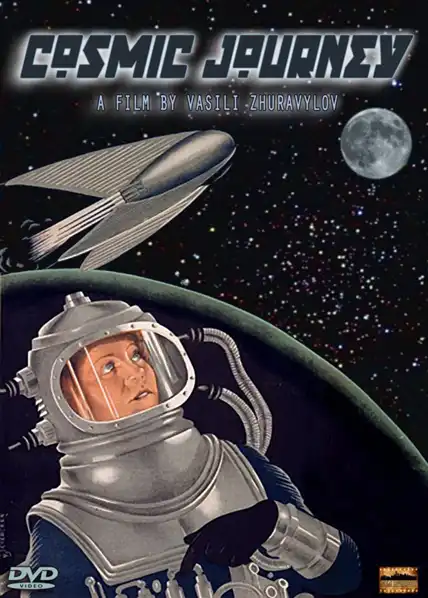
Director's Spotlight: Soviet Union
A Deep Dive into the 1936 Vision of Vasily Zhuravlyov
The thematic gravity of Cosmic Journey (1936) is rooted in the artistic risks taken by Vasily Zhuravlyov that eventually paid off. Defining a new era of Soviet Union artistic expression, it demands to be seen by anyone who cares about the art of film.
In Cosmic Journey, Vasily Zhuravlyov pushes the boundaries of conventional narrative. The film's unique approach to its subject matter has sparked endless debates and interpretations among cinephiles and critics alike.
To fully appreciate Cosmic Journey, one must consider the cinematic climate of 1936. During this period, Soviet Union was undergoing significant artistic shifts, and Vasily Zhuravlyov was at the forefront of this Sci-Fi movement, often challenging established norms.
| Cinematography | Noir-Inspired |
| Soundtrack | Synth-Heavy |
| Editing | Rhythmic |
| Art Direction | Naturalist |
Visualizing the convergence of Vasily Zhuravlyov's style and the core Sci-Fi narrative.
In 1946, the Soviet space program is undergoing turmoil. Professor Sedikh, who is planning to lead the first manned exploration to the moon, is denounced by his rival Professor Karin as being too old and too mentally unstable for the mission. Professor Sedikh, aided by his assistant Marina and a youth named Andryusha, disregard Prof. Karin's authority and make a successful landing on the moon. Although a few problems occur at the moon, including the discovery of a damaged oxygen tank and Professor Sedikh's becoming trapped under a fallen boulder, the expedition is a success and the cosmonauts return to Moscow.
Decades after its release, Cosmic Journey remains a vital piece of the cinematic puzzle. Its influence can be seen in countless modern works, solidifying Vasily Zhuravlyov's status as a master of the craft in Soviet Union and beyond.