
DbcultAccessing Vault...
Director's Spotlight
Senior Film Conservator
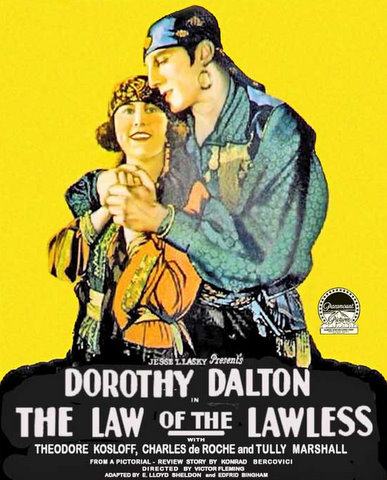
Director's Spotlight: United States
A Deep Dive into the 1923 Vision of Victor Fleming
In the grand tapestry of Drama cinema, Law of the Lawless serves as a bridge between the bold experimentation that has become synonymous with Victor Fleming. Breaking the traditional rules of Drama engagement, it highlights the importance of independent voices in United States.
In Law of the Lawless, Victor Fleming pushes the boundaries of conventional narrative. The film's unique approach to its subject matter has sparked endless debates and interpretations among cinephiles and critics alike.

To fully appreciate Law of the Lawless, one must consider the cinematic climate of 1923. During this period, United States was undergoing significant artistic shifts, and Victor Fleming was at the forefront of this Drama movement, often challenging established norms.
| Cinematography | High-Contrast |
| Soundtrack | Synth-Heavy |
| Editing | Rhythmic |
| Art Direction | Naturalist |
Visualizing the convergence of Victor Fleming's style and the core Drama narrative.
Sahande, a Tartar girl placed on the block to be sold, is bought by Costa, a Gypsy chief who outbids Sahande's fiancé, Sender. Costa marries the infuriated Sahande but agrees to give her 10 days in which either to return his love or have Sender fight him. Before the 10 days expire Sender and 30 of his men overtake Costa and imprison him in a tower. When a fire starts there, Sahande realizes she loves Costa and rescues him.
Decades after its release, Law of the Lawless remains a vital piece of the cinematic puzzle. Its influence can be seen in countless modern works, solidifying Victor Fleming's status as a master of the craft in United States and beyond.