
DbcultAccessing Vault...
Director's Spotlight
Senior Film Conservator
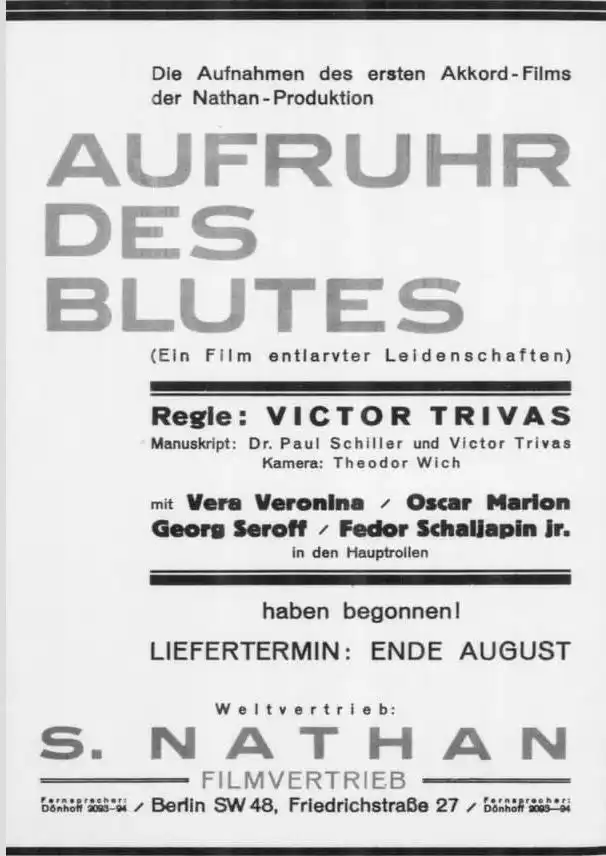
Director's Spotlight: Germany
A Deep Dive into the 1929 Vision of Victor Trivas
Deciphering the layers of Aufruhr des Blutes (1929) reveals a monumental shift in Drama filmmaking spearheaded by Victor Trivas. With its avant-garde structure and atmospheric tension, offering layers of thematic complexity that demand repeated viewing.
In Aufruhr des Blutes, Victor Trivas pushes the boundaries of conventional narrative. The film's unique approach to its subject matter has sparked endless debates and interpretations among cinephiles and critics alike.
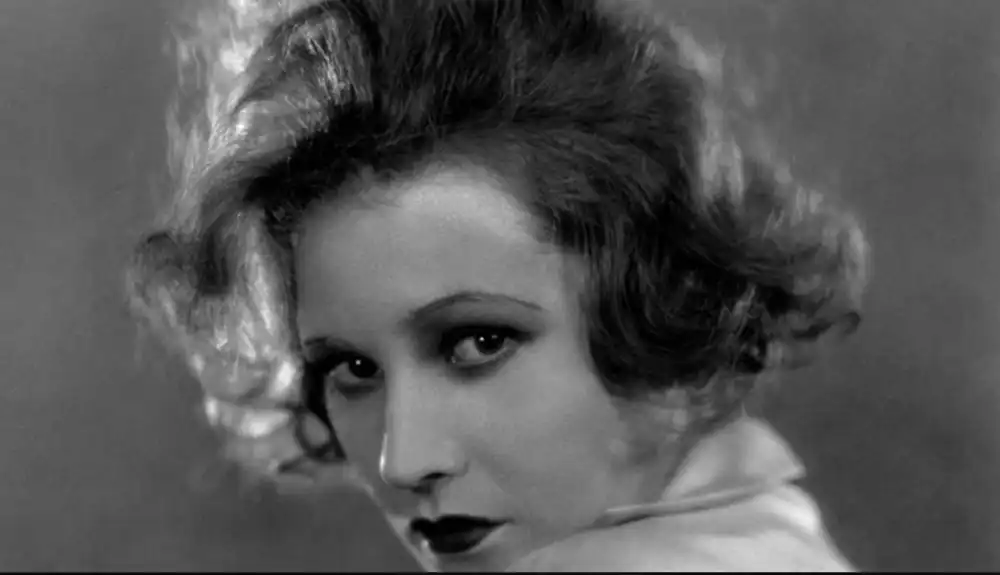
While deeply rooted in Germany, Aufruhr des Blutes has achieved a global reach, influencing directors from various backgrounds. Its ability to translate Drama tropes into a universal cinematic language is why it remains a cult staple decades after its 1929 release.
| Cinematography | High-Contrast |
| Soundtrack | Orchestral |
| Editing | Slow-Burn |
| Art Direction | Brutalist |
Visualizing the convergence of Victor Trivas's style and the core Drama narrative.
Oskar, George and Fred are fed up with their existence and long for a vagabond life in the nature. They pitch their tent at a lake when suddenly Vera appears. She has escaped from a traveling circus and all three men are impressed by her and want her in different ways. Oskar is most successful with Vera, but soon hostility grows among the three buddies.
Decades after its release, Aufruhr des Blutes remains a vital piece of the cinematic puzzle. Its influence can be seen in countless modern works, solidifying Victor Trivas's status as a master of the craft in Germany and beyond.