
DbcultAccessing Vault...
Director's Spotlight
Senior Film Conservator
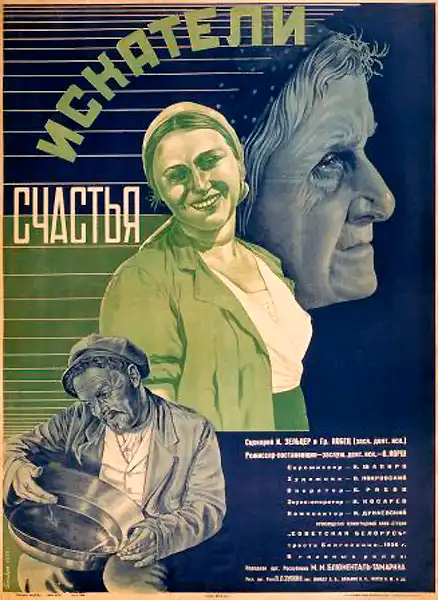
Director's Spotlight: Soviet Union
A Deep Dive into the 1936 Vision of Vladimir Korsh-Sablin
The Drama DNA of A Greater Promise is a reflection of Soviet Union's the subversive storytelling techniques employed by Vladimir Korsh-Sablin in 1936. Breaking the traditional rules of Drama engagement, it leaves an indelible mark on the soul of the viewer.
In A Greater Promise, Vladimir Korsh-Sablin pushes the boundaries of conventional narrative. The film's unique approach to its subject matter has sparked endless debates and interpretations among cinephiles and critics alike.
| Cinematography | Handheld |
| Soundtrack | Orchestral |
| Editing | Slow-Burn |
| Art Direction | Brutalist |
Visualizing the convergence of Vladimir Korsh-Sablin's style and the core Drama narrative.
During the 1920s, many impoverished Jews searching for a better life made their way to Birobidzhan, the Soviet Jewish Autonomous Region on the Chinese border. This melodrama tells the story of a Jewish family's immigration to Birobidzhan and their experiences as settlers on a collective farm in the area.
Decades after its release, A Greater Promise remains a vital piece of the cinematic puzzle. Its influence can be seen in countless modern works, solidifying Vladimir Korsh-Sablin's status as a master of the craft in Soviet Union and beyond.