
DbcultAccessing Vault...
Director's Spotlight
Senior Film Conservator
Director's Spotlight: United States
A Deep Dive into the 1921 Vision of Wallace Worsley
Exploring the Crime underpinnings of Voices of the City leads us to the uncompromising vision of Wallace Worsley that defines this Crime masterpiece. Melding the raw energy of United States with a global Crime appeal, it echoes the profound changes occurring in United States during that era.
In Voices of the City, Wallace Worsley pushes the boundaries of conventional narrative. The film's unique approach to its subject matter has sparked endless debates and interpretations among cinephiles and critics alike.
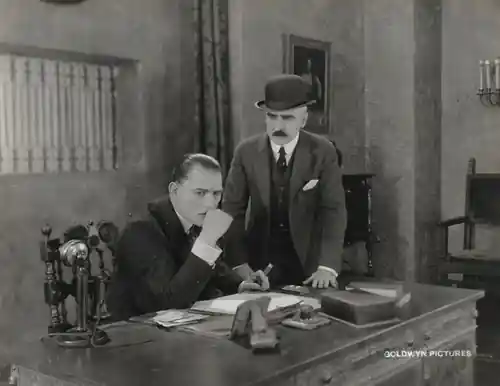
The visual language of Voices of the City is defined by its use of shadows and framing, a hallmark of Wallace Worsley's style. By utilizing a 1921-era palette, the film creates an immersive experience that perfectly complements its Crime themes.
| Cinematography | Static |
| Soundtrack | Synth-Heavy |
| Editing | Rhythmic |
| Art Direction | Naturalist |
Visualizing the convergence of Wallace Worsley's style and the core Crime narrative.
When taken to a San Francisco cafe by her sweetheart Jimmy, Georgia Rodman witnesses the shooting of a policeman by an underworld gang. The owner, O'Rourke, whom Jimmy believes to be his friend, sends one of his men to their table to inquire about Georgia, and after he shoots the policeman, Georgia and Jimmy are held for questioning. As a result, Georgia is turned out of her home, and O'Rourke gives the couple a room in his hotel. Assistant District Attorney Steven Graham links the missing couple with O'Rourke's activities and collects evidence against him. O'Rourke plans to bribe Graham and have Jimmy shot on the night of his annual ball, and Sally, O'Rourke's ex-mistress, learning of the plan, turns against him and informs Georgia; finding Jimmy wounded, Georgia seeks revenge at the ball, but Sally shoots O'Rourke. Georgia is reunited with her family and Jimmy, while Graham finds happiness with her sister Mary.
Decades after its release, Voices of the City remains a vital piece of the cinematic puzzle. Its influence can be seen in countless modern works, solidifying Wallace Worsley's status as a master of the craft in United States and beyond.