
DbcultAccessing Vault...
Director's Spotlight
Senior Film Conservator
Director's Spotlight: United States
A Deep Dive into the 1925 Vision of Walt Disney
Exploring the Comedy underpinnings of Alice's Egg Plant leads us to the stylistic boundaries pushed by Walt Disney during the production. Through a lens of existential fatalism and Comedy tropes, it continues to spark endless debates among critics and cinephiles alike.
In Alice's Egg Plant, Walt Disney pushes the boundaries of conventional narrative. The film's unique approach to its subject matter has sparked endless debates and interpretations among cinephiles and critics alike.
To fully appreciate Alice's Egg Plant, one must consider the cinematic climate of 1925. During this period, United States was undergoing significant artistic shifts, and Walt Disney was at the forefront of this Comedy movement, often challenging established norms.
| Cinematography | Static |
| Soundtrack | Experimental |
| Editing | Elliptical |
| Art Direction | Expressionist |
Visualizing the convergence of Walt Disney's style and the core Comedy narrative.
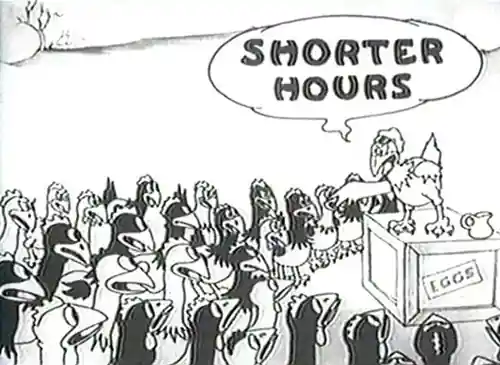
Little Alice and Julius the cat operate an egg factory. The hens are a bit lazy, but Julius cracks the whip. An out-of-town chicken arrives, only she's a labour agitator, Little Red Henski from Moscow, Russia, who comes courtesy of the I.W.W. Soon she has the hens striking for "shorter hours" and "smaller eggs". Alice and Julius need to fill an urgent egg order. They spot two roosters fighting. They organize a pugilistic event, and charge each hen one egg admission. Alice and Julius fill their order and drive away ... but the load slips off, breaking all the eggs.
Decades after its release, Alice's Egg Plant remains a vital piece of the cinematic puzzle. Its influence can be seen in countless modern works, solidifying Walt Disney's status as a master of the craft in United States and beyond.