
DbcultAccessing Vault...
Director's Spotlight
Senior Film Conservator
Director's Spotlight: United States
A Deep Dive into the 1915 Vision of Walter Edwin
When we examine the cinematic landscape of United States, The Sentimental Lady emerges as a landmark work of the enduring legacy of Walter Edwin's artistic contribution to the genre. Through a lens of existential fatalism and cult tropes, it captures a specific kind of cinematic magic that is rarely replicated.
In The Sentimental Lady, Walter Edwin pushes the boundaries of conventional narrative. The film's unique approach to its subject matter has sparked endless debates and interpretations among cinephiles and critics alike.
To fully appreciate The Sentimental Lady, one must consider the cinematic climate of 1915. During this period, United States was undergoing significant artistic shifts, and Walter Edwin was at the forefront of this cult movement, often challenging established norms.
| Cinematography | Static |
| Soundtrack | Experimental |
| Editing | Elliptical |
| Art Direction | Expressionist |
Visualizing the convergence of Walter Edwin's style and the core cult narrative.
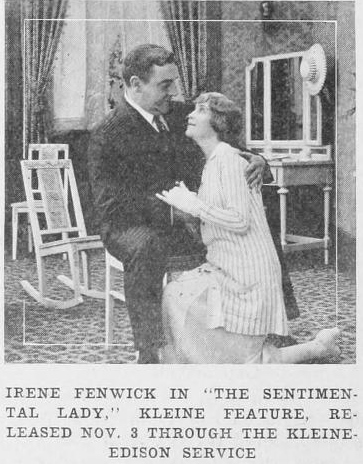
Amy Cary, owner of a controlling interest in the Peoples Gas Company, of which her uncle, Peter Cary, is president, is practical but sentimental. It is indefinitely understood that she is engaged to marry Norman Van Aulsten, whose intriguing father is vice-president of the company. Van Aulsten, Sr., has secretly purchased worthless Suburban Lighting Company stock and plans to unload it at an exorbitant price on the People's Gas Company, depending on his son to induce Amy to vote approval of his plan. Amy goes to Trout Lake Camp to spend the summer, where she meets a chum, Helen Nelson, who invites her brother Bob, a young attorney, to join her. Young Van Aulsten also is a visitor, paying considerable attention to Amy Cary, but clandestinely making love to, and deceiving to the point of defiling, the daughter of Johnson, the camp guide. Amy's uncle, innocently falling into Van Aulsten's scheme to unload the worthless lighting company stock on the People's Gas Company, writes, asking Amy her opinion regarding it. Her reply brings him to the camp also, where he is quickly followed by Van Aulsten, Sr. Nelson fathoms Van Aulsten's intentions regarding the worthless stock, and also sees that Van Aulsten is depending on his son's marriage to Amy to further his machinations. He invokes the aid of his sister's sweetheart, who invites Amy to go for a row with him. She steps into the boat, Nelson quickly follows, leaving his willing friend ashore. Nelson talks plainly to Amy, telling her he is taking her to her uncle who has gone to a nearby island for a fishing trip, and that he purposes telling her uncle about Van Aulsten's scheme. He apparently arouses her ire by advising her not to marry young Van Aulsten. Arrived at the island they are surprised not to find Amy's uncle, who had returned to the camp for forgotten fishing tackle. The situation is tense when they discover that their boat has gone adrift. Meanwhile Amy's absence has occasioned alarm, and when Bob's friend tells of the proposed trip to the island, a rescue party is made up of Amy's uncle, Van Aulsten and his son. Arrived there they find Amy and Bob trying to prepare a belated meal. Nelson is asked to leave while her uncle and Van Aulsten urge Amy to get ready to got at once with them to the city, where a meeting of the Gas Company stockholders is scheduled the next day. Bob suspects their intentions, and promptly sets their boat adrift also. When this is discovered, there is general indignation in which Amy apparently joins. Bob is berated, but excites Amy's sentimental nature again when he takes to the water for a long, perilous swim, in an attempt to recover their boat. "Isn't he a hero?" she asks of young Van Aulsten. "I'd like to see you do anything as brave as that." The marooned party is finally rescued by Bob's relief expeditions and taken back to the camp, where, as they land, Johnson the guide, attempts to shoot young Van Aulsten. Amy prevents the tragedy, but scorns young Van Aulsten when she learns of his behavior toward Johnson's daughter. In rapid sequence, a happy termination of the situation is reached, but the bankrupt lighting company's stock is still on the market.
Decades after its release, The Sentimental Lady remains a vital piece of the cinematic puzzle. Its influence can be seen in countless modern works, solidifying Walter Edwin's status as a master of the craft in United States and beyond.