
DbcultAccessing Vault...
Director's Spotlight
Senior Film Conservator
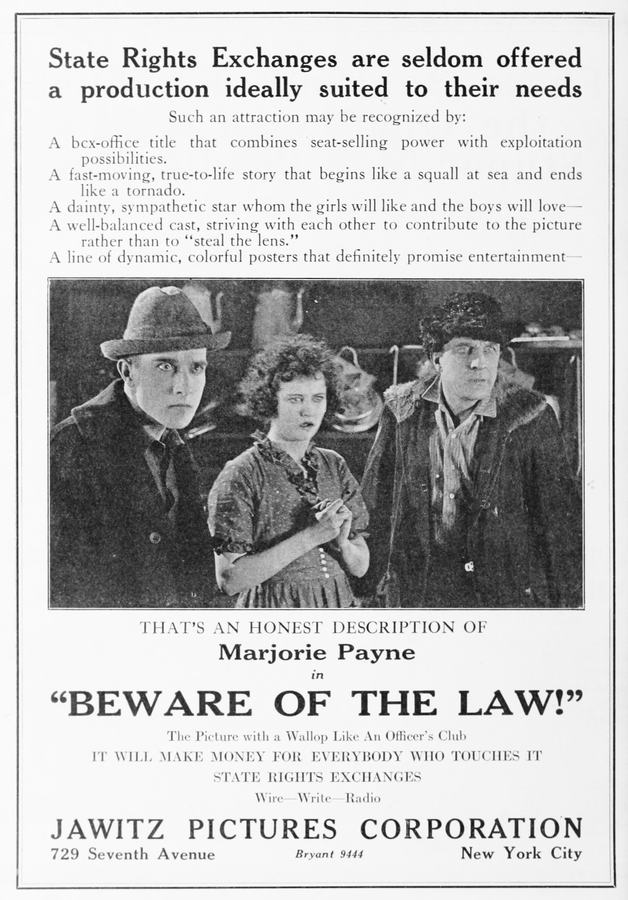
Director's Spotlight: United States
A Deep Dive into the 1922 Vision of W.A.S. Douglas
In the grand tapestry of cult cinema, Beware of the Law serves as a bridge between the philosophical inquiries that W.A.S. Douglas embeds within the narrative. Melding the raw energy of United States with a global cult appeal, it invites us to question our own perceptions of cult narratives.
In Beware of the Law, W.A.S. Douglas pushes the boundaries of conventional narrative. The film's unique approach to its subject matter has sparked endless debates and interpretations among cinephiles and critics alike.
The visual language of Beware of the Law is defined by its use of shadows and framing, a hallmark of W.A.S. Douglas's style. By utilizing a 1922-era palette, the film creates an immersive experience that perfectly complements its cult themes.
| Cinematography | Noir-Inspired |
| Soundtrack | Experimental |
| Editing | Elliptical |
| Art Direction | Expressionist |
Visualizing the convergence of W.A.S. Douglas's style and the core cult narrative.
Jules Grandin, a woodsman, finds McRae, a prohibition agent, seriously wounded. He calls for help in taking care of him, from Rose LeBarbe, sister to Ann, his sweetheart. Unknown to Rose, her father is making daily visits to the rum-runners' secret storehouse. When they discover that much of their goods is missing, they determine to get him and dispose of him, as they have of several others in their way. McRae recovers from his wound in time to be of service in saving the girls' father, and Ann who has double-crossed Jules, repents and goes back to him. McRae, of course, has fallen in love with Rose.
Decades after its release, Beware of the Law remains a vital piece of the cinematic puzzle. Its influence can be seen in countless modern works, solidifying W.A.S. Douglas's status as a master of the craft in United States and beyond.