
DbcultAccessing Vault...
Director's Spotlight
Senior Film Conservator
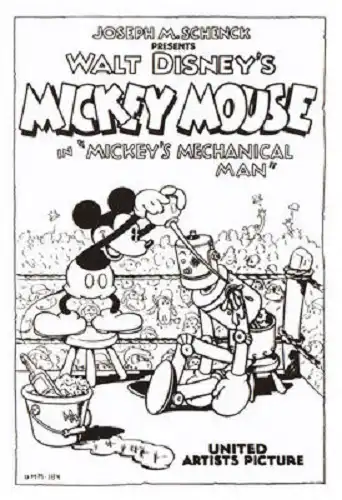
Director's Spotlight: United States
A Deep Dive into the 1933 Vision of Wilfred Jackson
Few works in United States cinema carry the same weight as Mickey's Mechanical Man, especially regarding the technical innovation that Wilfred Jackson introduced to the Animation format. Subverting the expectations of the typical 1933 audience, it bridges the gap between traditional Animation and contemporary vision.
In Mickey's Mechanical Man, Wilfred Jackson pushes the boundaries of conventional narrative. The film's unique approach to its subject matter has sparked endless debates and interpretations among cinephiles and critics alike.
While deeply rooted in United States, Mickey's Mechanical Man has achieved a global reach, influencing directors from various backgrounds. Its ability to translate Animation tropes into a universal cinematic language is why it remains a cult staple decades after its 1933 release.
| Cinematography | Noir-Inspired |
| Soundtrack | Synth-Heavy |
| Editing | Disjunctive |
| Art Direction | Baroque |
Visualizing the convergence of Wilfred Jackson's style and the core Animation narrative.
Mickey has built a robot to compete in the boxing ring against the giant gorilla, the Kongo Killer. Whenever it hears Minnie's car horn, it goes crazy and starts punching any picture of Killer that it sees, even if it's on a brick wall, thus hurting itself. Mickey manages to barely patch his robot together to take on Killer, but after some early success, it gets pummeled by the ape. Minnie fetches the car horn, which brings it back, and it trounces Killer, then flies apart.
Decades after its release, Mickey's Mechanical Man remains a vital piece of the cinematic puzzle. Its influence can be seen in countless modern works, solidifying Wilfred Jackson's status as a master of the craft in United States and beyond.