
DbcultAccessing Vault...
Director's Spotlight
Senior Film Conservator
Director's Spotlight: United States
A Deep Dive into the 1914 Vision of Will S. Davis
When we examine the cinematic landscape of United States, Through Dante's Flames emerges as a landmark work of the enduring legacy of Will S. Davis's artistic contribution to the genre. Through a lens of existential fatalism and cult tropes, it captures a specific kind of cinematic magic that is rarely replicated.
In Through Dante's Flames, Will S. Davis pushes the boundaries of conventional narrative. The film's unique approach to its subject matter has sparked endless debates and interpretations among cinephiles and critics alike.
The visual language of Through Dante's Flames is defined by its use of shadows and framing, a hallmark of Will S. Davis's style. By utilizing a 1914-era palette, the film creates an immersive experience that perfectly complements its cult themes.
| Cinematography | Deep Focus |
| Soundtrack | Experimental |
| Editing | Invisible |
| Art Direction | Kitsch |
Visualizing the convergence of Will S. Davis's style and the core cult narrative.
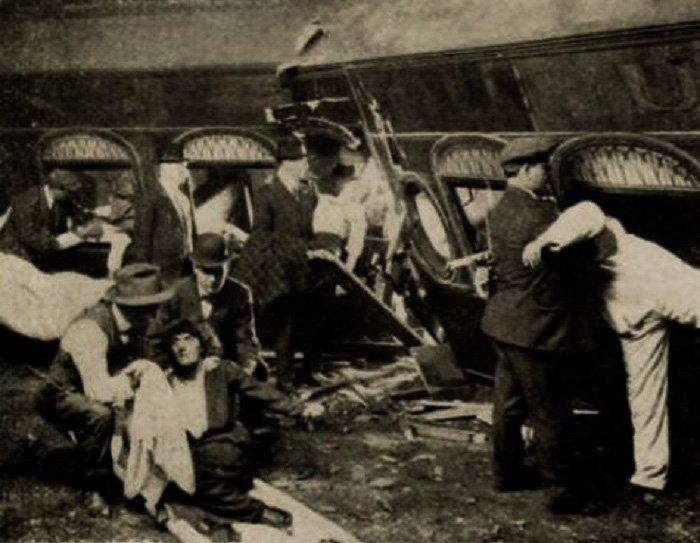
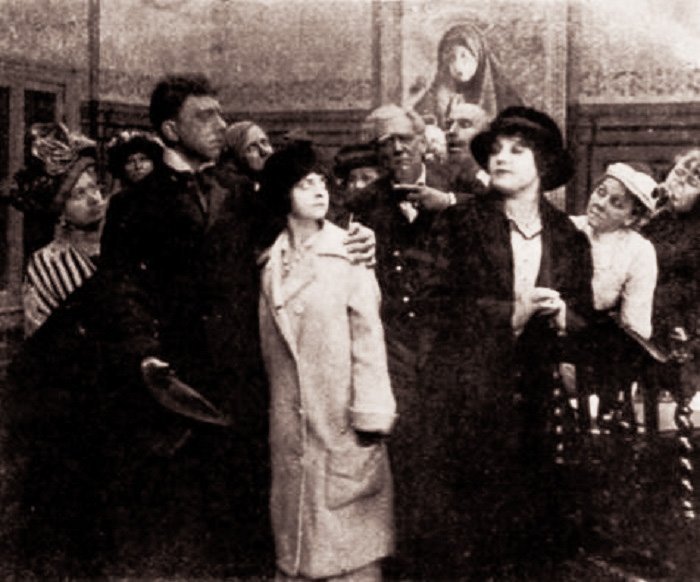
Kate Clarke and her brother, Joe, are alone in the world. Kate learns of her brother's connection with a counterfeiter's gang only when the police invade their rooms to arrest Joe. After a desperate struggle, Joe escapes, but Kate is seriously injured by an accidental blow. She recovers, but the memory of her past is gone. Kate wanders away to the city and becomes a cabaret dancer. Richard Harris, a noted artist, has a vision of creating a "Madonna," but has been unable to secure a suitable model. While visiting the cabaret, he sees in Kate the model he seeks and she consents to pose for the painting. As the painting progresses, Harris' interest ripens into love, but this only amuses her. At length, bored by posing, she suddenly goes away. The painting is yet unfinished. Harris, heartbroken over his loss, pours out the whole story in a letter to his twin brother, Joseph, a minister. Meanwhile the train which Kate had taken is wrecked near the village where Harris' brother is both pastor and physician to his flock. Interested in Kate's peculiar case, he has removed her to his home. The shock has blotted out entirely the memory of the past few years of her life as a dancer, nor does she remember how she came to be aboard the train. She recalls only her life before her first injury. The artist meanwhile has made futile attempts to finish his "Madonna." Broken in health and despondent he sends for his brother. One day, in his delirium, seeing Kate before his eyes, he finishes the painting. The brother arrives too late, but recognizing Kate as the original of the "Madonna" he takes it back home and hangs it in the church. During the minister's absence, Jane Perkins, one of his parishioners who is jealous of his attentions to Kate, finds the letter which the artist has written to his brother. She reads it and learns the tragic story of the artist and the girl who posed for the picture, the "Madonna." Kate's brother, Joe, unrepentant, is still a counterfeiter and a member of a gang located near this village. Kate and Joe meet, but he begs her not to disclose his identity or whereabouts. Unfortunately, Jane sees the affectionate parting and straightway starts a scandal. A bazaar fete is in progress in the church rooms, and while some of the congregation are admiring the "Madonna," Jane discloses Kate's past, and thus for the first time the girl, who overhears it, cruelly learns the story of her lost few years. The church members turn against her, but the minister defends her. By impersonating one of the members of the church, Fagin, a detective, captures all of the gang except Joe, who takes refuge in the church. He is tracked there and accidentally upsets a small stove, setting fire to the church. Badly injured, Joe crawls to the place where his sister is now living. The minister rescues Kate. The "Madonna" is practically the only article which escapes the flames. Kate, returning home, finds Joe. His condition requiring medical attention, she summons the minister, who remains through the night with Joe. Pledged to keep Joe's presence a secret, the minister is unable to answer the elder's demand for explanations. Joe dies and the gossiping villagers soon learn the truth. The minister presents the "Madonna"' to a Metropolitan Art Gallery where the public flock to see it. Though they may not know it, they are looking at the perfect likeness of the minister's present wife and child.
Decades after its release, Through Dante's Flames remains a vital piece of the cinematic puzzle. Its influence can be seen in countless modern works, solidifying Will S. Davis's status as a master of the craft in United States and beyond.