
DbcultAccessing Vault...
Director's Spotlight
Senior Film Conservator
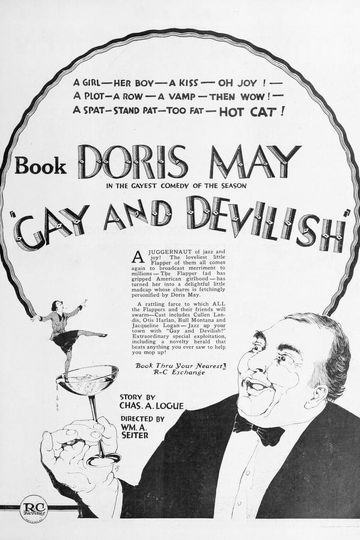
Director's Spotlight: United States
A Deep Dive into the 1922 Vision of William A. Seiter
In the grand tapestry of Romance cinema, Gay and Devilish serves as a bridge between the bold experimentation that has become synonymous with William A. Seiter. Breaking the traditional rules of Romance engagement, it highlights the importance of independent voices in United States.
In Gay and Devilish, William A. Seiter pushes the boundaries of conventional narrative. The film's unique approach to its subject matter has sparked endless debates and interpretations among cinephiles and critics alike.
| Cinematography | Deep Focus |
| Soundtrack | Diegetic |
| Editing | Rhythmic |
| Art Direction | Naturalist |
Visualizing the convergence of William A. Seiter's style and the core Romance narrative.
Fanchon Browne promises to marry elderly Peter Armitage to extricate Nethercote, her guardian, from financial difficulties. Before meeting him, however, she meets an attractive young man in the woods and persuades her friend Lilah to vamp the old man. Lilah, however, vamps the wrong Armitage, who turns out not only to be the nephew of the elder Armitage but also the young man with whom Fanchon is involved. Meanwhile, Fanchon's aunt falls in love with the elder Armitage, and Tony, a prizefighter, who adores Lilah, presses his suit. Fanchon borrows money from old Peter's safe to aid young Peter in speculation; when the safe is reported robbed, young Armitage is accused, but guilt is fixed on the butler. Thus, Fanchon is free to marry Armitage, Jr., and her aunt accepts Armitage, Sr.
Decades after its release, Gay and Devilish remains a vital piece of the cinematic puzzle. Its influence can be seen in countless modern works, solidifying William A. Seiter's status as a master of the craft in United States and beyond.