
DbcultAccessing Vault...
Director's Spotlight
Senior Film Conservator
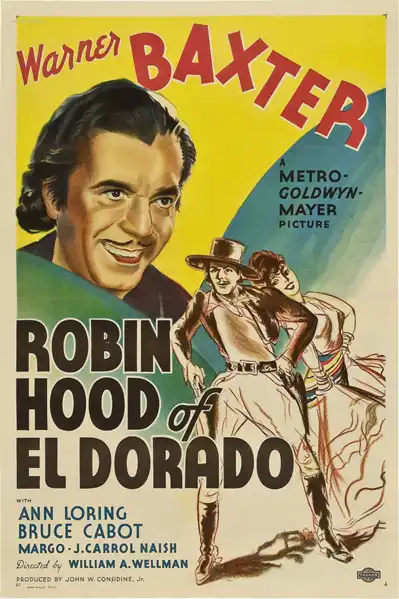
Director's Spotlight: United States
A Deep Dive into the 1936 Vision of William A. Wellman
Peeling back the layers of William A. Wellman's Robin Hood of El Dorado exposes the collaborative alchemy between William A. Wellman and the 1936 creative team. Anchored by a narrative that is both personal and universal, it reinforces the idea that cinema is a medium of infinite possibilities.
In Robin Hood of El Dorado, William A. Wellman pushes the boundaries of conventional narrative. The film's unique approach to its subject matter has sparked endless debates and interpretations among cinephiles and critics alike.
In this work, William A. Wellman explores the intersection of Western and United States cultural identity. The meticulous attention to detail suggests a deep-seated commitment to pushing the boundaries of the medium, ensuring that Robin Hood of El Dorado remains a relevant topic of study for Western enthusiasts.
| Cinematography | High-Contrast |
| Soundtrack | Orchestral |
| Editing | Slow-Burn |
| Art Direction | Brutalist |
Visualizing the convergence of William A. Wellman's style and the core Western narrative.
In the 1840s, Mexico has ceded California to the United States, making life nearly impossible for the Mexican population due to the influx of land and gold-crazy Americans. Farmer Joaquin Murrieta avenges his wife's death against the four Americans who killed her and is branded an outlaw. The reward for his capture is increased as he subsequently kills the men who brutally murder his brother. Joining with bandit Three-Fingered Jack, Murrieta raises an army of disaffected Mexicans and goes on a rampage against the Americans, finally forcing his erstwhile friend Bill Warren to lead a posse against him.
Decades after its release, Robin Hood of El Dorado remains a vital piece of the cinematic puzzle. Its influence can be seen in countless modern works, solidifying William A. Wellman's status as a master of the craft in United States and beyond.