
DbcultAccessing Vault...
Director's Spotlight
Senior Film Conservator
Director's Spotlight: United States
A Deep Dive into the 1920 Vision of William C. de Mille
Analyzing The Tree of Knowledge (1920) requires a deep dive into the defining moment in Drama history that William C. de Mille helped create. Defining a new era of United States artistic expression, it transcends regional boundaries to tell a universal story.

In The Tree of Knowledge, William C. de Mille pushes the boundaries of conventional narrative. The film's unique approach to its subject matter has sparked endless debates and interpretations among cinephiles and critics alike.
| Cinematography | Static |
| Soundtrack | Synth-Heavy |
| Editing | Disjunctive |
| Art Direction | Baroque |
Visualizing the convergence of William C. de Mille's style and the core Drama narrative.
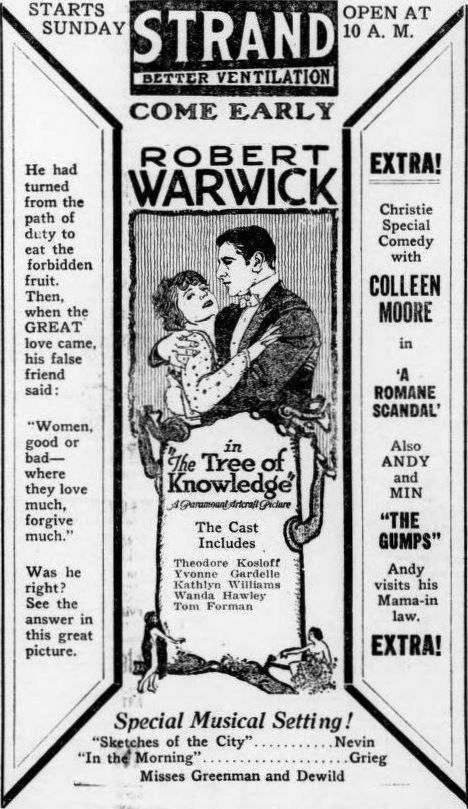
The wicked Belle gets her hands on Nigel Stanyon, a young man who was about to embark on a career as a minister. She seduces him, empties his bank account and tosses him aside. In the depths of despair, Nigel is discovered by Brian, a wealthy old friend, who secures him a job as an overseer on his family estate. One day Brian embarks on a trip abroad, and Nigel is astounded when he returns home with a new wife--Nigel's old flame, Belle.
Decades after its release, The Tree of Knowledge remains a vital piece of the cinematic puzzle. Its influence can be seen in countless modern works, solidifying William C. de Mille's status as a master of the craft in United States and beyond.