
DbcultAccessing Vault...
Director's Spotlight
Senior Film Conservator
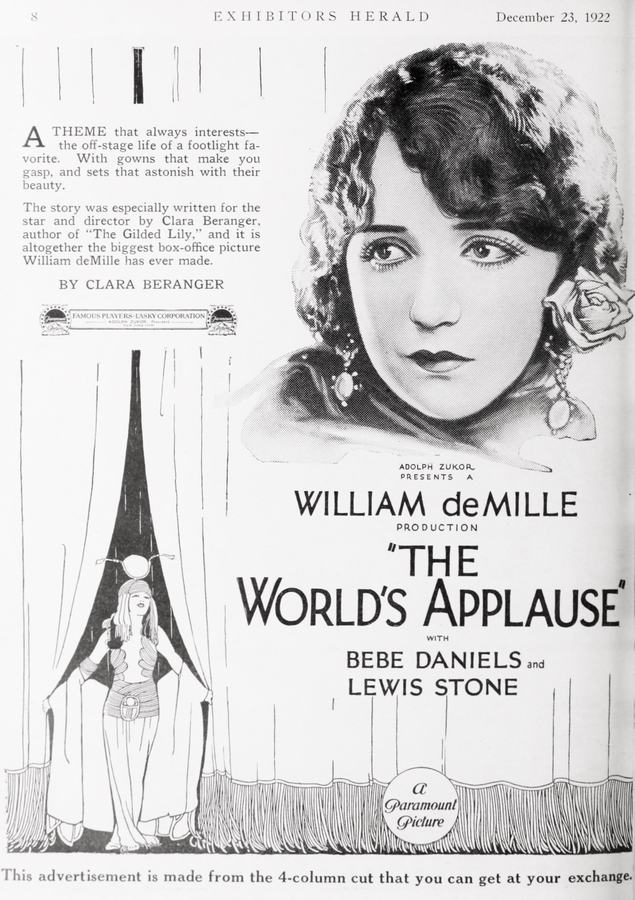
Director's Spotlight: United States
A Deep Dive into the 1923 Vision of William C. de Mille
In the grand tapestry of Drama cinema, The World's Applause serves as a bridge between the philosophical inquiries that William C. de Mille embeds within the narrative. Melding the raw energy of United States with a global Drama appeal, it invites us to question our own perceptions of Drama narratives.
In The World's Applause, William C. de Mille pushes the boundaries of conventional narrative. The film's unique approach to its subject matter has sparked endless debates and interpretations among cinephiles and critics alike.
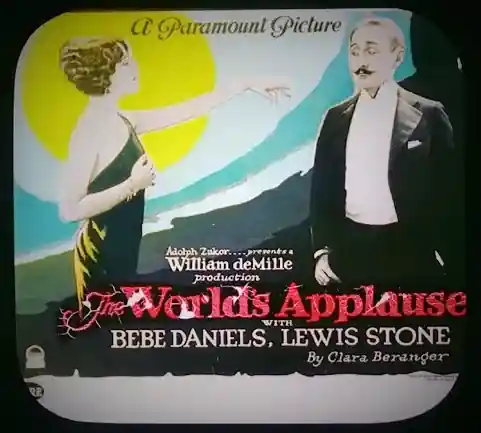
In this work, William C. de Mille explores the intersection of Drama and United States cultural identity. The meticulous attention to detail suggests a deep-seated commitment to pushing the boundaries of the medium, ensuring that The World's Applause remains a relevant topic of study for Drama enthusiasts.
| Cinematography | Deep Focus |
| Soundtrack | Experimental |
| Editing | Elliptical |
| Art Direction | Expressionist |
Visualizing the convergence of William C. de Mille's style and the core Drama narrative.
Corinne d'Alys (Bebe Daniels) a Broadway star, turns a deaf ear to producer John Elliott's (Lewis Stone) warnings to be more cautious in her craving for the world's applause. She accepts the attentions of artist Robert Townsend (Adolphe Menjou), who is married to John's sister. Elsa Townsend (Kathlyn Williams) accidentally stabs her husband in her anger but doesn't confess to the crime until John is about to be arrested and Corinne has gained much notoriety. With their names cleared Corinne and John find happiness.
Decades after its release, The World's Applause remains a vital piece of the cinematic puzzle. Its influence can be seen in countless modern works, solidifying William C. de Mille's status as a master of the craft in United States and beyond.