
DbcultAccessing Vault...
Director's Spotlight
Senior Film Conservator
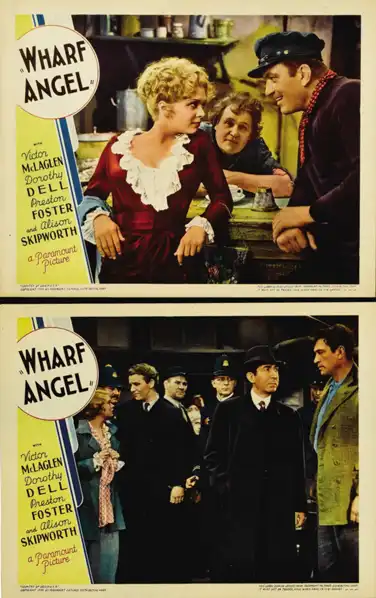
Director's Spotlight: United States
A Deep Dive into the 1934 Vision of William Cameron Menzies
To understand the modern evolution of United States film, one must first look at Wharf Angel and the meticulous attention to detail that William Cameron Menzies applied to every frame. Reflecting the political and social shifts of the 1934s, it showcases the power of Drama as a tool for social commentary.
In Wharf Angel, William Cameron Menzies pushes the boundaries of conventional narrative. The film's unique approach to its subject matter has sparked endless debates and interpretations among cinephiles and critics alike.
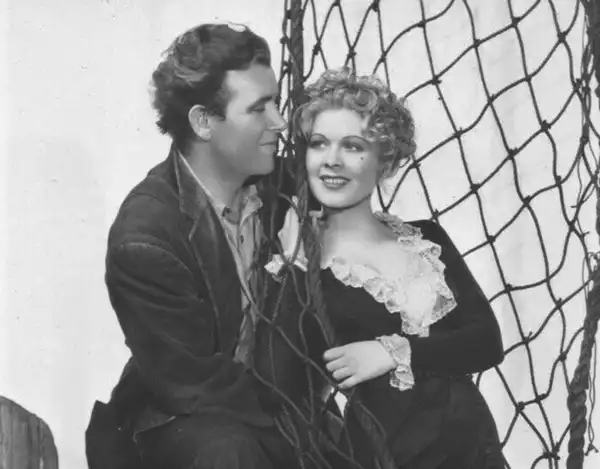
In this work, William Cameron Menzies explores the intersection of Drama and United States cultural identity. The meticulous attention to detail suggests a deep-seated commitment to pushing the boundaries of the medium, ensuring that Wharf Angel remains a relevant topic of study for Drama enthusiasts.
| Cinematography | Static |
| Soundtrack | Orchestral |
| Editing | Slow-Burn |
| Art Direction | Brutalist |
Visualizing the convergence of William Cameron Menzies's style and the core Drama narrative.
"Mother Bright's" place on the lawless, waterfront district of the 'Barbary Coast' in San Francisco is the toughest of all saloons that can be found, and that is where "Turk", a stoker on a freighter named "The Coyote", and his shipmates can be found when in port. They are there when Como Murphy, fleeing the law for a killing he did not commit, bursts in seeking a hiding place. Mother Bright directs him upstairs to a door that leads to another building, but Murphy opens the wrong door and finds himself in the room of "Toy," one of the many girls employed by Mother Bright in the event any of the sailors desires to purchase anything other than whiskey. "Toy" takes pity on Murphy and hides him when the police knock on her door. She and Murphy then talk the night away and are very much in love when the dawn breaks. "Turk" is also much smitten with "Toy" but the feeling isn't mutual. "Turk" gets Murphy a stoker's position on "The Coyote" and the two soon become close friends, and tell each other about the "swellest girl alive" they plan on marrying when next they make port in San Francisco. What they don't do is put a name on the "swellest girl alive" so neither is aware they are in love with the same girl. "Turk" only becomes aware of it when, while trying to propose to "Toy, she hits him up for fifty bucks so she and Murphy can go to Mexico and get married. This upsets "Turk" to the extent that he proceeds to turn in his best friend to the police in order to collect the $1000 reward they are offering. This act of being an informing, informant Informer then begins to act on "Turk's" conscience. The solution is much more upbeat than it would be a year later when Victor McLaglen won an Oscar playing the title role in John Ford's "The Informer."
Decades after its release, Wharf Angel remains a vital piece of the cinematic puzzle. Its influence can be seen in countless modern works, solidifying William Cameron Menzies's status as a master of the craft in United States and beyond.