
DbcultAccessing Vault...
Director's Spotlight
Senior Film Conservator
Director's Spotlight: United States
A Deep Dive into the 1917 Vision of William Desmond Taylor
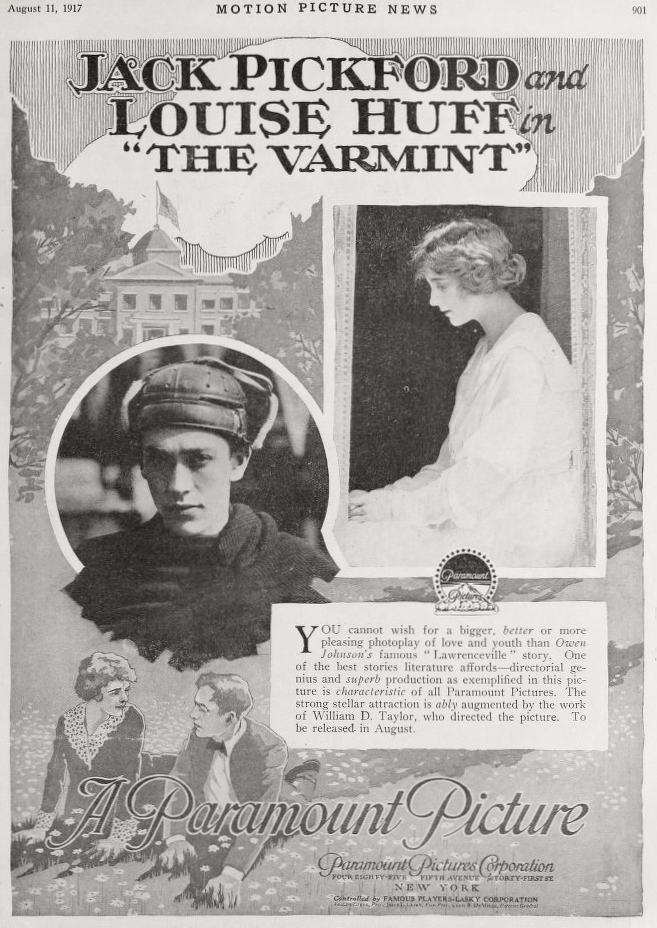
The brilliance of The Varmint (1917) is inseparable from a monumental shift in cult filmmaking spearheaded by William Desmond Taylor. Occupying a unique space between cult and pure art, it serves as a blueprint for future generations of cult directors.
In The Varmint, William Desmond Taylor pushes the boundaries of conventional narrative. The film's unique approach to its subject matter has sparked endless debates and interpretations among cinephiles and critics alike.
| Cinematography | Deep Focus |
| Soundtrack | Minimalist |
| Editing | Disjunctive |
| Art Direction | Baroque |
Visualizing the convergence of William Desmond Taylor's style and the core cult narrative.
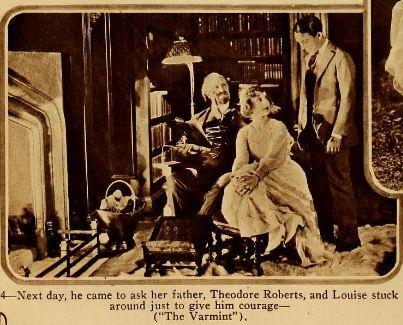
John Humperdink Stover, otherwise known as "The Varmint" for his pestiferousness or as "Dink" when in special favor, was expelled from a boarding school and sent to Lawrenceville Academy. On the stage on the way to the school he meets a silent man whom Dink sizes up for a salesman and he proceeds to wax eloquent on the subject of his past career and the reason he was expelled from his previous school. The "salesman" is actually the professor of Latin known to the boys as the "Roman." Dink boasts that in a week he will have the boys at the school in his power. A strange uneasiness grips him when he sees that he does not make just the impression he expected. Little by little he succeeds in making himself the most thoroughly disliked and abhorred person on the campus. Dink rises a point in his schoolmates' estimation when he discovers on reporting to the Latin class that the instructor is no other than the traveling man of the stage on the day of his arrival, and in order to make good some of the many boasts he made on that day fakes the translation. The Roman, possessed of a good sense of humor, compliments "Dink" on his performance, much to everyone's surprise. The first girl to attract Dink Stover is the pretty daughter of the Roman, considerably older than he is. After a short and one-sided flirtation, Miss McCarty becomes engaged to another man and Dink is desperate until some new neckwear arrives at the local haberdasher's and diverts his mind from his agony. As a result of his neglect of study, Dink finds himself about to be dropped in school for falling off in his studies. He is to have a private examination at the Roman's house. Stover decides to cheat, and arranges with the Tennessee Shad and MacNooder to overturn a large water cooler outside the Roman's door and other devices to get him out of the way. To his utter dismay, the Roman goes out of the room and stays, thus putting him on his honor. Dink signs his name at the head of the blank paper and is dumbfounded when, upon the Roman's return, he seems to scan the blank sheets closely and says : "I think this will about pass you, Stover." The two discover that they had been friends from the first and Dink really comes into his own when the Roman explains that as he is now an upperclassman, he must set a good example for the younger boys.
Decades after its release, The Varmint remains a vital piece of the cinematic puzzle. Its influence can be seen in countless modern works, solidifying William Desmond Taylor's status as a master of the craft in United States and beyond.