
DbcultAccessing Vault...
Director's Spotlight
Senior Film Conservator
Director's Spotlight: United States
A Deep Dive into the 1920 Vision of William Humphrey
Witnessing the stylistic transformation of Drama through The Midnight Bride reveals the global recognition that William Humphrey garnered after the release of The Midnight Bride. Serving as a mirror to the anxieties of a changing world, offering layers of thematic complexity that demand repeated viewing.
In The Midnight Bride, William Humphrey pushes the boundaries of conventional narrative. The film's unique approach to its subject matter has sparked endless debates and interpretations among cinephiles and critics alike.
| Cinematography | Deep Focus |
| Soundtrack | Experimental |
| Editing | Elliptical |
| Art Direction | Expressionist |
Visualizing the convergence of William Humphrey's style and the core Drama narrative.
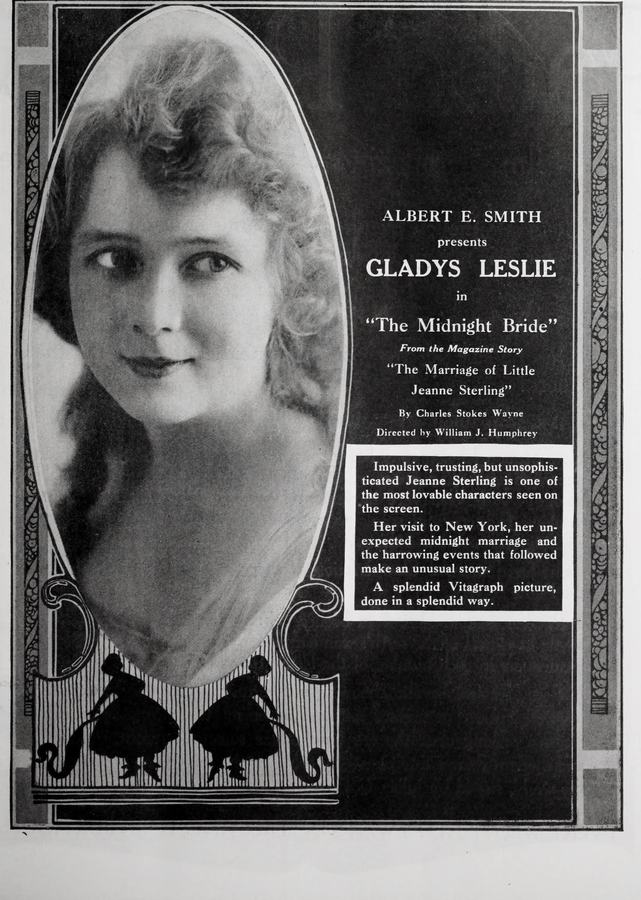
While waiting on a New York park bench for the return of her friends, country girl Jeanne Sterling meets Forrest Chenoweth, a rich young wastrel who, while drunk, registered for a marriage license with fortune-hunting Helen Dorr. Enchanted with Jeanne's innocence, Forrest proposes to Jeanne, and they are married by an alderman friend of Forrest's with the license that Forrest had taken out with Helen. That night Forrest drinks too much, falls in his room and kills himself. The scandal appears in the papers, forcing Jeanne to confess the marriage to her sweetheart Robert Pitcairn. However, Helen, in an attempt to acquire the Chenoweth fortune, claims to be Forrest's widow, thus disgracing Jeanne. The alderman, induced by his son, who is in league with Helen, refuses to recognize Jeanne, but finally relents, clearing the girl's besmirched reputation.
Decades after its release, The Midnight Bride remains a vital piece of the cinematic puzzle. Its influence can be seen in countless modern works, solidifying William Humphrey's status as a master of the craft in United States and beyond.