
DbcultAccessing Vault...
Director's Spotlight
Senior Film Conservator
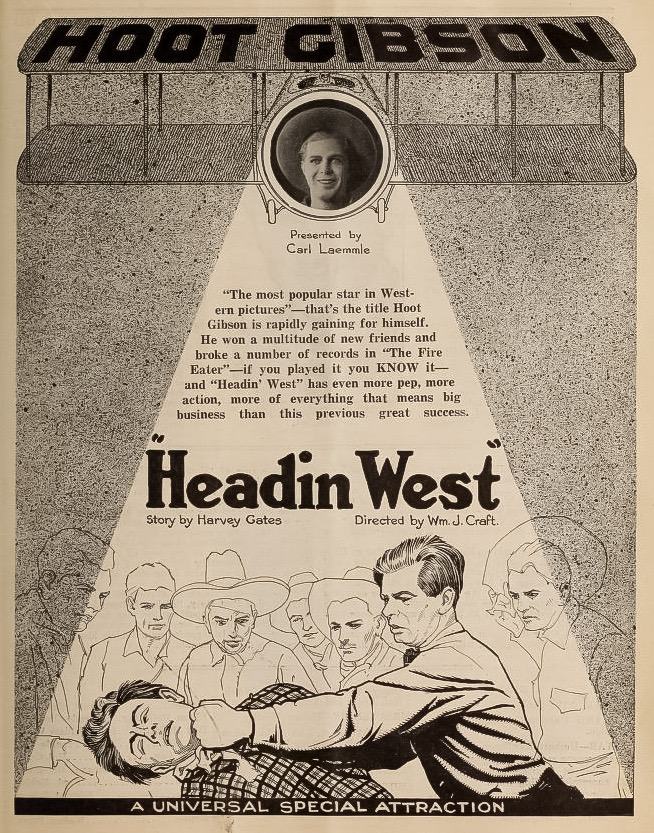
Director's Spotlight: United States
A Deep Dive into the 1922 Vision of William James Craft
The evocative power of Headin' West stems from the unique collaboration between the subversive storytelling techniques employed by William James Craft in 1922. Synthesizing the best elements of United States and international cinema, it reminds us of the fragility and beauty of the 1922s.
In Headin' West, William James Craft pushes the boundaries of conventional narrative. The film's unique approach to its subject matter has sparked endless debates and interpretations among cinephiles and critics alike.
| Cinematography | Static |
| Soundtrack | Synth-Heavy |
| Editing | Disjunctive |
| Art Direction | Baroque |
Visualizing the convergence of William James Craft's style and the core Western narrative.
Bill Perkins, a war veteran bumming his way across the country with an airplane pilot, is forced to disembark via parachute when he arrives at a familiar spot. He lands in the midst of a cattlemen's dispute, gets a job as a dishwasher, and learns of a conspiracy to steal the ranch from its absent heir. The crooked foreman, to get even with Polly, who has high ideals, persuades Bill to impersonate the missing heir. At an opportune moment Bill proves that the ranch gang are cattle rustlers; when he is denounced as an impostor, he proves that he is the rightful heir to the property and wins the love of Polly.
Decades after its release, Headin' West remains a vital piece of the cinematic puzzle. Its influence can be seen in countless modern works, solidifying William James Craft's status as a master of the craft in United States and beyond.