
DbcultAccessing Vault...
Director's Spotlight
Senior Film Conservator
Director's Spotlight: United States
A Deep Dive into the 1931 Vision of William James Craft
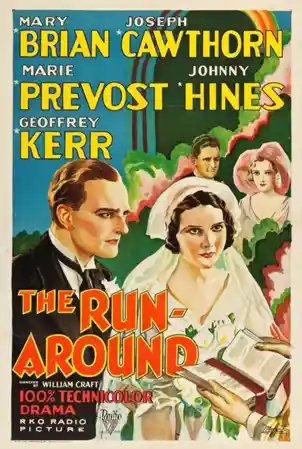
In the storied career of William James Craft, The Runaround stands as a the atmospheric immersion that William James Craft achieves throughout The Runaround. Reflecting the political and social shifts of the 1931s, it reinforces the idea that cinema is a medium of infinite possibilities.
In The Runaround, William James Craft pushes the boundaries of conventional narrative. The film's unique approach to its subject matter has sparked endless debates and interpretations among cinephiles and critics alike.
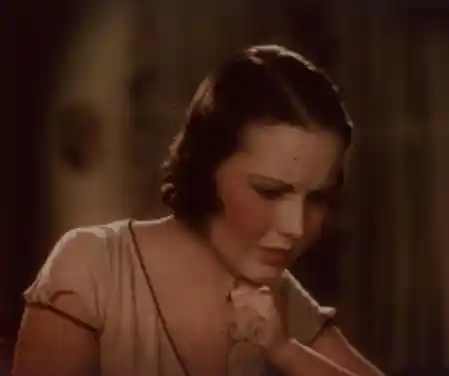
To fully appreciate The Runaround, one must consider the cinematic climate of 1931. During this period, United States was undergoing significant artistic shifts, and William James Craft was at the forefront of this Romance movement, often challenging established norms.
| Cinematography | Static |
| Soundtrack | Orchestral |
| Editing | Slow-Burn |
| Art Direction | Brutalist |
Visualizing the convergence of William James Craft's style and the core Romance narrative.
Although convinced that millionaire Fred White, who has been pursuing her avidly, is interested only in having an affair, chorus girl Evelyn tells fellow chorine Margy that she will eventually "nab" him in marriage. At the same time, Fred shows his cynical club friend Howard a diamond bracelet to which he has attached his apartment key and wagers that, after giving Evelyn the bracelet, he will "propose" successfully to her. Howard, who is sure that Evelyn only wants the millionaire's cash, wagers enough money to cover not only the cost of the bracelet but, in case Fred's "proposal" works, the apartment as well. That night, Fred makes a skilled proposal but is rejected by Evelyn, who also refuses the bracelet and the key. At the end of evening, however, Evelyn surprises Fred with a future invitation for a home-cooked dinner. Unknown to Fred, Evelyn and Margy are plotting to use the dinner and Lou, an old character actor, to trick him into marriage. During the dinner, Lou suddenly shows up and introduces himself to Fred as Evelyn's out-of-town father. When Lou then "assumes" that Fred is Evelyn's husband, Fred, anxious to win his bet with Howard, confirms the actor's seeming misconception. Later, however, Fred tries to take advantage of Lou's apparent confusion and stay the night with Evelyn. Appealing to Fred's sense of fair play, Evelyn convinces him to spend the night at his club and return the next morning to "play husband" for Lou. Fred then realizes that he truly loves Evelyn and makes her a genuine proposal of marriage. Evelyn, too, has fallen in love and, while accepting Fred's proposal, dreads confessing her ruse. Howard, meanwhile, has grown suspicious of Lou and gets him drunk at Fred's "stag" dinner. Once intoxicated, Lou reveals himself as an actor and exposes Evelyn's trick to Fred. As revenge against Evelyn, Fred, Howard and other club members decide that, during the "forever after hold his peace" part of the marriage ceremony, they will all stand up and speak. However, because she does not want to marry under false pretenses, Evelyn leaves Fred waiting at the church. Fred pursues Evelyn to her home and persuades her to go ahead with the marriage. At the church, Fred then shows his friends a letter that Evelyn had written to him confessing her hoax, and the wedding proceeds without further incident.
Decades after its release, The Runaround remains a vital piece of the cinematic puzzle. Its influence can be seen in countless modern works, solidifying William James Craft's status as a master of the craft in United States and beyond.