
DbcultAccessing Vault...
Director's Spotlight
Senior Film Conservator
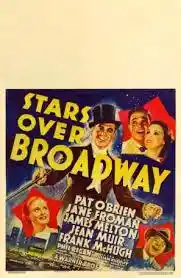
Director's Spotlight: United States
A Deep Dive into the 1935 Vision of William Keighley
The 1935 release of Stars Over Broadway marked a significant moment for the enduring legacy of William Keighley's artistic contribution to the genre. By challenging the status quo of 1935 cinema, it has cemented its place in the global cult cinema archive.
In Stars Over Broadway, William Keighley pushes the boundaries of conventional narrative. The film's unique approach to its subject matter has sparked endless debates and interpretations among cinephiles and critics alike.
To fully appreciate Stars Over Broadway, one must consider the cinematic climate of 1935. During this period, United States was undergoing significant artistic shifts, and William Keighley was at the forefront of this Musical movement, often challenging established norms.
| Cinematography | Handheld |
| Soundtrack | Orchestral |
| Editing | Slow-Burn |
| Art Direction | Brutalist |
Visualizing the convergence of William Keighley's style and the core Musical narrative.
Al is a down-on-his-luck promoter who is thinking of taking the final bow when he meets singing porter Jan. He sees something in Jan so he signs him to a contract. Al works odd jobs to pay for Jan's singing lessons and drops the idea of Opera when he learns that it will take years. He has him sing in a nightclub and from there it is up. But Jan soon starts missing lessons and rehearsals and hits the bottle so the partnership between Al and Jan ends. Soon Jan is also unemployed and Al pays the professor to take him to Italy to see if he will be able to sing Opera.
Decades after its release, Stars Over Broadway remains a vital piece of the cinematic puzzle. Its influence can be seen in countless modern works, solidifying William Keighley's status as a master of the craft in United States and beyond.