
DbcultAccessing Vault...
Director's Spotlight
Senior Film Conservator
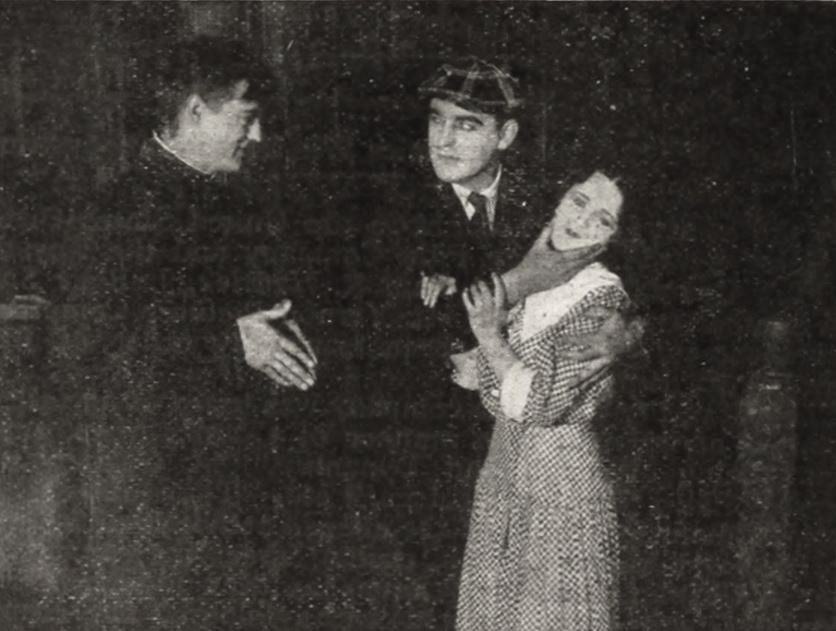
Director's Spotlight: United States
A Deep Dive into the 1915 Vision of William Nigh
Peeling back the layers of William Nigh's A Yellow Streak exposes the collaborative alchemy between William Nigh and the 1915 creative team. Anchored by a narrative that is both personal and universal, it reinforces the idea that cinema is a medium of infinite possibilities.
In A Yellow Streak, William Nigh pushes the boundaries of conventional narrative. The film's unique approach to its subject matter has sparked endless debates and interpretations among cinephiles and critics alike.
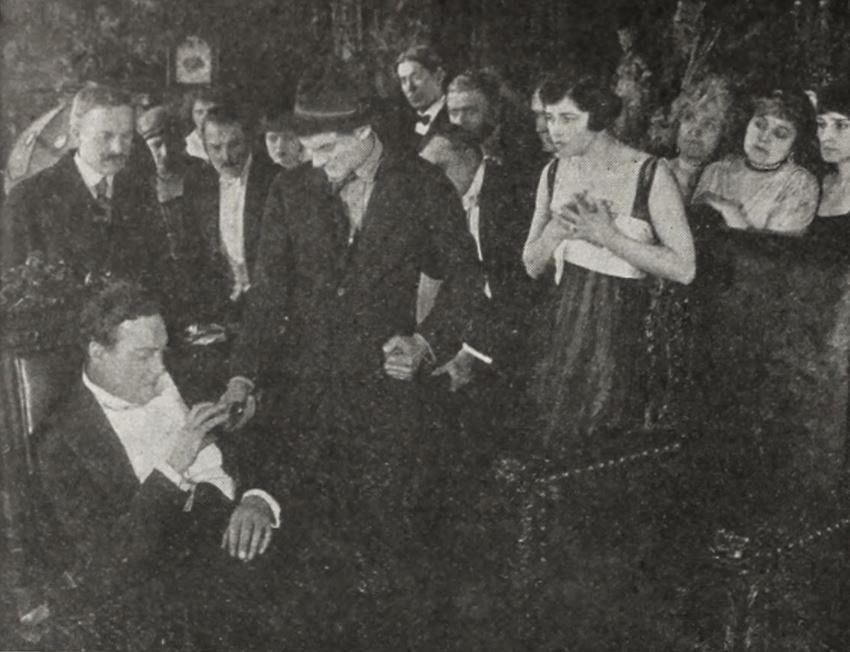
To fully appreciate A Yellow Streak, one must consider the cinematic climate of 1915. During this period, United States was undergoing significant artistic shifts, and William Nigh was at the forefront of this cult movement, often challenging established norms.
| Cinematography | Handheld |
| Soundtrack | Synth-Heavy |
| Editing | Disjunctive |
| Art Direction | Baroque |
Visualizing the convergence of William Nigh's style and the core cult narrative.
Barry Dale, the atom, a Wall Street broker, is financially ruined by his perfidious and faithless wife, and her companion, Richard Marvin, another broker, who has posed as Dale's best friend. Disheartened and depressed, Dale goes to his apartment expecting comfort and solace from his wife. Instead he finds her there in the embraces of Marvin. They laugh at him, and Marvin, the stronger of the two men, literally throws Dale out of his own home. He gives him a pistol and tells him the whole affair can best be settled, to every one's satisfaction, if Dale will kill himself. Dale walks aimlessly through the streets with this end in view. Long after midnight he finds himself on the Brooklyn Bridge, where he observes a girl about to leap into the river. A shout from Dale causes her to turn back and flee. They are mere silhouettes in the dim light, and do not see each other's faces. The girl, another atom in the swirl of human life, is Mary Austin, a child of the tenements, who had planned suicide to escape marrying Jack Rader, a gambler, to satisfy a debt her father owed to Rader. After the incident on the bridge Barry indifferently wanders to a railroad station and buys a ticket west, as far as his money will carry him. In the far west Barry brings up in a little mining town. There he falls in with an outlaw, who is being sought by a sheriff's posse. A few days later, in a lonely mountain trail, the posse closes in on the outlaw. He directs Barry to safety, but is killed by the sheriff. A sky-pilot, who had joined them a few hours before, is likewise killed by the posse's bullets. Barry buries them both, and decides to impersonate first one and then the other. Tom Austin, Mary's brother, is addicted to drink, and Mary succeeds in inducing his employers in New York to send him west. Subsequently, arrangements are made for Mary and her father to join Tom in the west. Disguised as the outlaw, Barry holds up the coach that Mary and her father are riding in. Struck by the girl's beauty, and her plea not to rob them, Barry grants the request for a kiss. Afterward, as the sky-pilot, Barry and Mary become well acquainted in the mining town, where she and her father have taken over a small hotel. Jack Rader, the gambler, turns up and compromises Tom Austin in a hold-up. He offers to clear him if Mary will consent to marry him. Mary tells the sky-pilot of her predicament. Barry, disguised as the outlaw, saves Tom and shoots the gambler in a pistol battle. When the sheriff's posse arrives he is disguised as the minister. With renewed strength and ample funds, Barry returns to New York and seeks out Marvin and his wife. He throws Marvin into the street and returns the revolver to him, with the same advice he received a year before. Back west Mary waits for the sky-pilot's return, standing every night on a little bridge that spans a mountain stream. She is about to despair of his return, when she hears his voice. She turns and sees the same silhouette she saw on the Brooklyn Bridge, and for the first time both know they met that night.
Decades after its release, A Yellow Streak remains a vital piece of the cinematic puzzle. Its influence can be seen in countless modern works, solidifying William Nigh's status as a master of the craft in United States and beyond.