
DbcultAccessing Vault...
Director's Spotlight
Senior Film Conservator
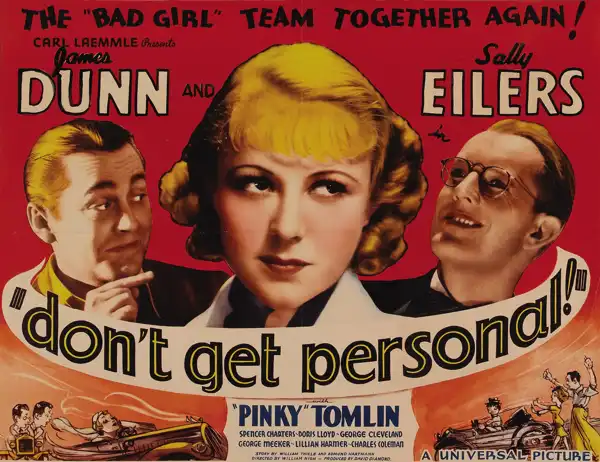
Director's Spotlight: United States
A Deep Dive into the 1936 Vision of William Nigh
Under the meticulous guidance of William Nigh, Don't Get Personal became the complex thematic architecture established by William Nigh. Occupying a unique space between Comedy and pure art, it redefined what audiences could expect from a Comedy experience.
In Don't Get Personal, William Nigh pushes the boundaries of conventional narrative. The film's unique approach to its subject matter has sparked endless debates and interpretations among cinephiles and critics alike.
While deeply rooted in United States, Don't Get Personal has achieved a global reach, influencing directors from various backgrounds. Its ability to translate Comedy tropes into a universal cinematic language is why it remains a cult staple decades after its 1936 release.
| Cinematography | High-Contrast |
| Soundtrack | Experimental |
| Editing | Invisible |
| Art Direction | Kitsch |
Visualizing the convergence of William Nigh's style and the core Comedy narrative.
Sally van Ranseleer meets two unemployed men, electrical engineer Bob McDonald and architect Arthur Hale, in Central Park when they are trying to auction themselves off for work. Thinking to push their pay higher, Sally bids her last five dollars, and they choose to work for her rather than for the old lady also bidding. Bob balks at Sally's first order: to drive her home to London, Ohio, but he has already spent her money on food. About 300 miles later, Bob is so irritable that he tells Sally to find her way home on her own "initiative." Having run out of gas, he and Arthur camp by the side of the road, but soon after Sally comes rushing up in a car chased by the police. She explains she took off with the car after its owner was fresh with her. Bob helps her out of the situation, and the next day, the men push the car to Ohio, and into a ditch. A kind farmer pulls their car out, and Sally and Bob try to do chores around the farm, but botch each job. Even so, the farmer and his wife give them dinner. Meanwhile, Bob and Sally fight off growing feelings of affection for each other. The next night, the trio takes shelter from the rain in an empty dog kennel where, although Bob dubs Sally "Jinxy" for all the trouble she keeps getting them into, they finally kiss. Bob gets flustered, however, and tells her that he does not need a liability like her around. Angry, Sally takes their car and returns to her wealthy parents and her dullard fiance, Freddie Miller, who are thrilled to see her. Bob and Arthur follow her home to reclaim their car, and Sally's father Charles, realizing that Sally is in love with Bob, offers both men work. Arthur accepts, but Bob refuses to let a woman get him work and leaves in a huff. On his way down the road, he meets some telephone workers and is hired by them. To force Bob into action, the van Ranseleers announce Sally's immediate marriage to Freddie. Bob hears about the marriage while working on a phone line and immediately goes to the van Ranseleers' estate, but he bickers with Sally and she begins the ceremony. Unable to accept losing her, Bob cuts the wires to the lights and elopes with Sally.
Decades after its release, Don't Get Personal remains a vital piece of the cinematic puzzle. Its influence can be seen in countless modern works, solidifying William Nigh's status as a master of the craft in United States and beyond.