
DbcultAccessing Vault...
Director's Spotlight
Senior Film Conservator
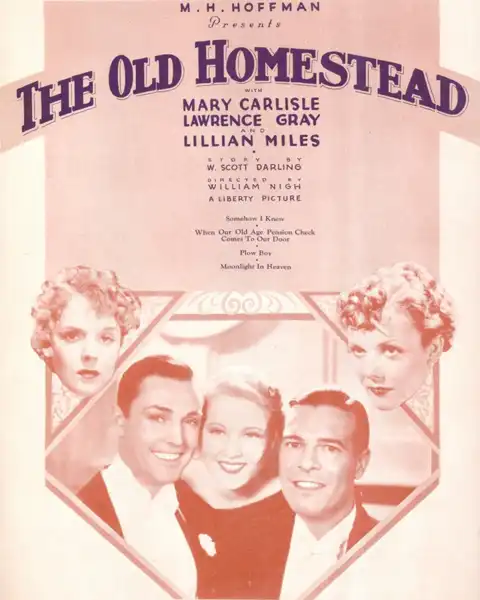
Director's Spotlight: United States
A Deep Dive into the 1935 Vision of William Nigh
To understand the modern evolution of United States film, one must first look at The Old Homestead and the meticulous attention to detail that William Nigh applied to every frame. Reflecting the political and social shifts of the 1935s, it showcases the power of Comedy as a tool for social commentary.
In The Old Homestead, William Nigh pushes the boundaries of conventional narrative. The film's unique approach to its subject matter has sparked endless debates and interpretations among cinephiles and critics alike.
In this work, William Nigh explores the intersection of Comedy and United States cultural identity. The meticulous attention to detail suggests a deep-seated commitment to pushing the boundaries of the medium, ensuring that The Old Homestead remains a relevant topic of study for Comedy enthusiasts.
| Cinematography | High-Contrast |
| Soundtrack | Orchestral |
| Editing | Slow-Burn |
| Art Direction | Brutalist |
Visualizing the convergence of William Nigh's style and the core Comedy narrative.
Wertheimer, a New York radio talent scout, shows up at Uncle Jed's barn dance having received numerous letters from Nancy Shackelford, the adopted daughter of Uncle Jed Shackelford, telling him about the musical talents of Bob and the other four farm-hand musicians. He hires the boys for a new radio program to be known as "The Old Homestead" broadcast from New York. Nancy and Uncle Jed accompany them, the latter as their manager. The show is a hit and Nancy is thrilled, especially when she meets famous crooner Rudy Nash. Elsie Wilson, Rudy's partner, resents the attention Rudy shows Nancy, and Bob takes an immediate dislike to Rudy. The band goes to a night club and get high on champagne which they think is cider. Peggy joins the boys in their clowning after the regular entertainers quit in indignation. Nancy and Rudy enter the café, and when the proprietor realizes that Nancy and (primarily) Rudy knows the boys, he offers them $1,250 a week to perform at the club. The jealous Elsie decides to make a play for Bob at the hotel where she too is staying. Slightly inebriated, she invites Bob up her suite. Nancy and Bob have a bitter quarrel when she returns and sees the imprint of Elsie's lips on Bob's cheek. The next morning, press agent Pratt and Wertheimer show up with two suitcases of fan mail for the "Farm Boys" and Bob's head begins to swell, as he thinks he is the attraction of the group and really believes he is "the golden voice of the air." Bob gets a show of his own, and Uncle Jed meets Peggy and is attracted to her. Three weeks later, Nancy and Bob are no longer speaking, Uncle Jed is spending money on Peggy, and Rudy is overwhelming Nancy with his attentions. Twice Bob has been late for a broadcast and Wertheimer tells him if he is late again, the sponsors will cancel him. Uncle Jed, who has no intentions of proposing, buys a diamond ring for Peggy and unthinkingly slips it on her engagement finger. She allows as how she'll be right proud to be Mrs. Jed Shackelford. Peggy is actually happy at the chance of marrying Jed and quitting New York for Uncle Jed's farm, but Nancy doesn't believe her. Bob gets a visit from Elsie's husband who threatens an alienation suit. Nancy tells him that she and Bob are engaged and that Elise is her best friend. he husband departs, and Nancy tells Bob of Rudy's proposal to her. He wishes her good luck and leaves for the farm without telling anyone.
Decades after its release, The Old Homestead remains a vital piece of the cinematic puzzle. Its influence can be seen in countless modern works, solidifying William Nigh's status as a master of the craft in United States and beyond.