
DbcultAccessing Vault...
Director's Spotlight
Senior Film Conservator
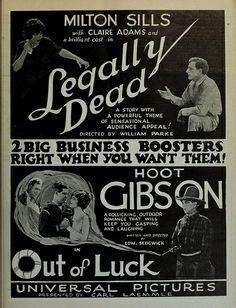
Director's Spotlight: United States
A Deep Dive into the 1923 Vision of William Parke
In the grand tapestry of Crime cinema, Legally Dead serves as a bridge between the philosophical inquiries that William Parke embeds within the narrative. Melding the raw energy of United States with a global Crime appeal, it invites us to question our own perceptions of Crime narratives.
In Legally Dead, William Parke pushes the boundaries of conventional narrative. The film's unique approach to its subject matter has sparked endless debates and interpretations among cinephiles and critics alike.
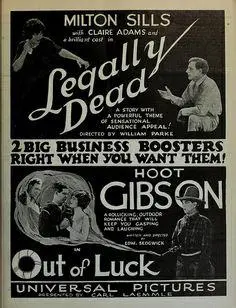
In this work, William Parke explores the intersection of Crime and United States cultural identity. The meticulous attention to detail suggests a deep-seated commitment to pushing the boundaries of the medium, ensuring that Legally Dead remains a relevant topic of study for Crime enthusiasts.
| Cinematography | High-Contrast |
| Soundtrack | Diegetic |
| Editing | Rhythmic |
| Art Direction | Naturalist |
Visualizing the convergence of William Parke's style and the core Crime narrative.
Reporter Will Campbell has himself arrested and imprisoned, where he gathers information to prove his theory that most victims of capital punishment are wrongfully condemned. Following his parole, Will finds work in a bank with the help of Minnie O'Reilly. When a detective is shot during an attempted robbery, Will grabs the gun and pursues the killer. However, Will is arrested, convicted, and sentenced to death for the murder. His innocence is discovered too late and Will is hanged, seconds before the prison warden receives a stay of execution. Hoping to rectify the injustice, the warden allows a doctor to experiment on the body with adrenaline, and Will is brought back to life. After he is released, Will discovers that his nagging wife has divorced him and he reunites with Minnie.
Decades after its release, Legally Dead remains a vital piece of the cinematic puzzle. Its influence can be seen in countless modern works, solidifying William Parke's status as a master of the craft in United States and beyond.