
DbcultAccessing Vault...
Director's Spotlight
Senior Film Conservator
Director's Spotlight: United States
A Deep Dive into the 1923 Vision of William Watson
To understand the modern evolution of United States film, one must first look at Under the White Robe and the meticulous attention to detail that William Watson applied to every frame. Reflecting the political and social shifts of the 1923s, it showcases the power of Comedy as a tool for social commentary.
In Under the White Robe, William Watson pushes the boundaries of conventional narrative. The film's unique approach to its subject matter has sparked endless debates and interpretations among cinephiles and critics alike.
The visual language of Under the White Robe is defined by its use of shadows and framing, a hallmark of William Watson's style. By utilizing a 1923-era palette, the film creates an immersive experience that perfectly complements its Comedy themes.
| Cinematography | Static |
| Soundtrack | Minimalist |
| Editing | Slow-Burn |
| Art Direction | Brutalist |
Visualizing the convergence of William Watson's style and the core Comedy narrative.
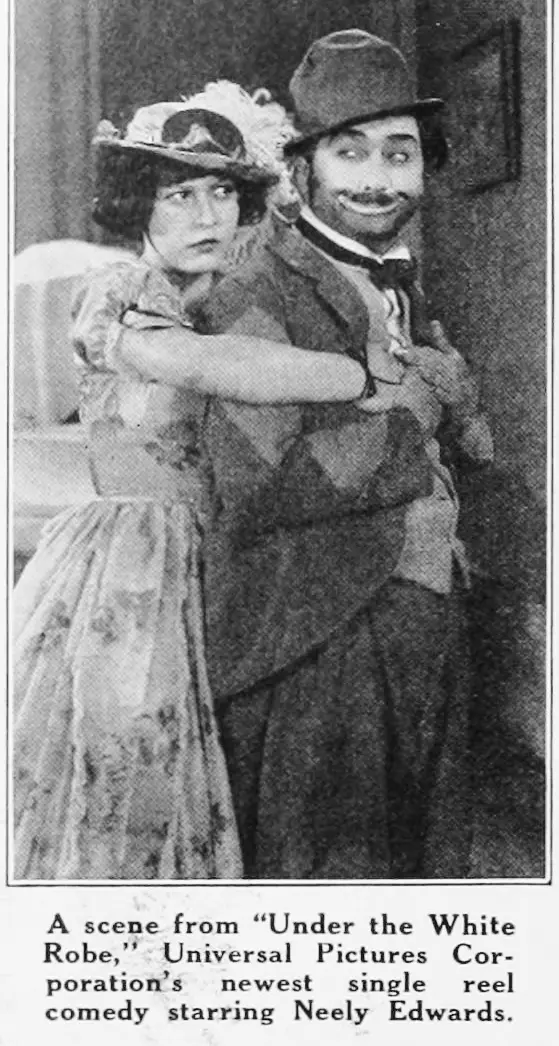
Nervy Ned, chased by cops, flees into a fancy dress ball, where he causes a sensation for his supposed make-up as a tramp. Driven from the ball by the cops' arrival, he jumps into a waiting automobile and is carried to a haunted house by a young girl eager to elope with her fiancé. The rival for the girl's hand arrives, ties up the minister, and scares Ned, the girl and black chauffeur by rigging up some spook fakes. The girl's lover arrives and is being married when the lights are put out, and Ned is substituted for the groom. The girl later divorces Ned and returns to her true love whom she marries.
Decades after its release, Under the White Robe remains a vital piece of the cinematic puzzle. Its influence can be seen in countless modern works, solidifying William Watson's status as a master of the craft in United States and beyond.