
DbcultAccessing Vault...
Director's Spotlight
Senior Film Conservator
Director's Spotlight: United States
A Deep Dive into the 1918 Vision of William Worthington
The artistic breakthrough represented by Ghost of the Rancho in 1918 highlights the uncompromising vision of William Worthington that defines this cult masterpiece. In the context of United States's rich cinematic history, it captures a specific kind of cinematic magic that is rarely replicated.
In Ghost of the Rancho, William Worthington pushes the boundaries of conventional narrative. The film's unique approach to its subject matter has sparked endless debates and interpretations among cinephiles and critics alike.
To fully appreciate Ghost of the Rancho, one must consider the cinematic climate of 1918. During this period, United States was undergoing significant artistic shifts, and William Worthington was at the forefront of this cult movement, often challenging established norms.
| Cinematography | Static |
| Soundtrack | Diegetic |
| Editing | Rhythmic |
| Art Direction | Naturalist |
Visualizing the convergence of William Worthington's style and the core cult narrative.
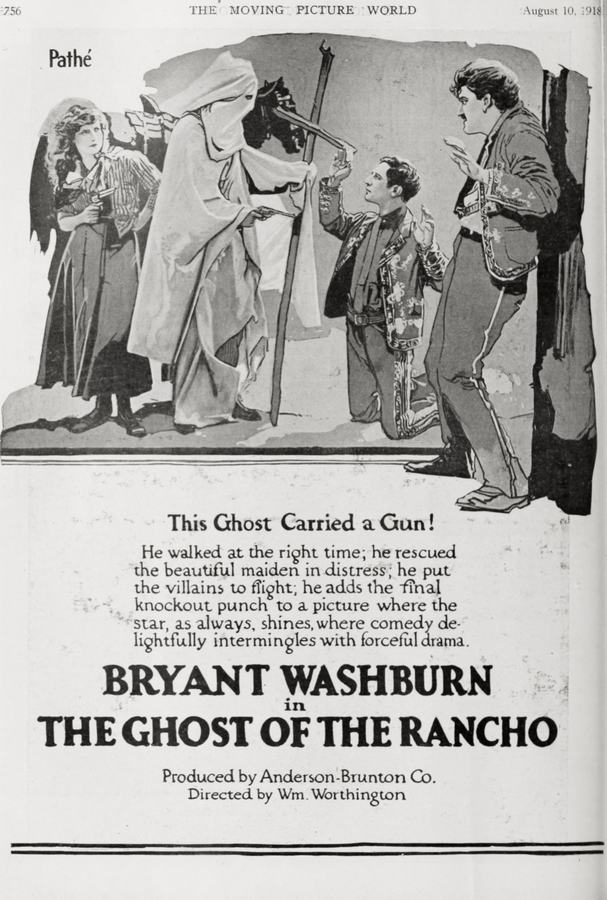
Jeffrey Wall, the dissipated grandson of a wealthy man, requests that a farewell party be given in his honor before he is disinherited. During the wild banquet, a Mexican dancer assaults Mary Drew and then shoots a man, but suspicion is cast on Jeffrey. At the death of her father, Mary is called home to her little village on the Mexican border but is followed by the lecherous dancer, who soon becomes the head of a gang of bandits. Jeffrey traces him and learns that the outlaws have taken control of a small rancho, shot its owner and kidnapped Mary. Jeffrey visits the rancho disguised as a ghost, and as the outlaws are fleeing in terror, the sheriff and his men arrive and arrest them all. Wall, Sr., pleased with the improvements in his son's character, comes West to bless the marriage of Jeffrey and Mary.
Decades after its release, Ghost of the Rancho remains a vital piece of the cinematic puzzle. Its influence can be seen in countless modern works, solidifying William Worthington's status as a master of the craft in United States and beyond.