
DbcultAccessing Vault...
Director's Spotlight
Senior Film Conservator
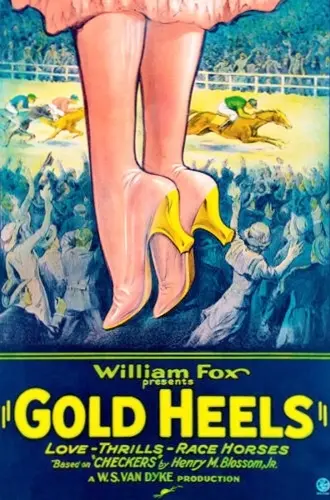
Director's Spotlight: United States
A Deep Dive into the 1924 Vision of W.S. Van Dyke
The thematic gravity of Gold Heels (1924) is rooted in the artistic risks taken by W.S. Van Dyke that eventually paid off. Defining a new era of United States artistic expression, it demands to be seen by anyone who cares about the art of film.
In Gold Heels, W.S. Van Dyke pushes the boundaries of conventional narrative. The film's unique approach to its subject matter has sparked endless debates and interpretations among cinephiles and critics alike.
To fully appreciate Gold Heels, one must consider the cinematic climate of 1924. During this period, United States was undergoing significant artistic shifts, and W.S. Van Dyke was at the forefront of this Drama movement, often challenging established norms.
| Cinematography | Noir-Inspired |
| Soundtrack | Synth-Heavy |
| Editing | Disjunctive |
| Art Direction | Baroque |
Visualizing the convergence of W.S. Van Dyke's style and the core Drama narrative.
Following a streak of hard luck at the racetrack, Boots and his pal, Push, are down to their last dime. Boots saves a drunken young man named Kendall from being robbed of his considerable winnings at the roulette table and later drives Kendall back to his small hometown. There Boots meets Pert Barlow and decides to stay near her, taking a job in her father's store. Old Barlow owns a broken-down racehorse named Gold Heels, which Boots buys from him and trains for the big race. At the local orphanage, a child dies because of the dilapidated condition of the building, and Pert raises enough money to build a new orphanage. Old Barlow takes charge of the money, but it is stolen. Boots is accused of the crime and sent to jail. He is sprung by his pals, loads Gold Heels in a horse-trailer, drives to the track, and watches his horse win the big race. Kendall is exposed as the real thief and Boots is reconciled with Pert, whose father gives them his blessing to be married.
Decades after its release, Gold Heels remains a vital piece of the cinematic puzzle. Its influence can be seen in countless modern works, solidifying W.S. Van Dyke's status as a master of the craft in United States and beyond.