
DbcultAccessing Vault...
Director's Spotlight
Senior Film Conservator
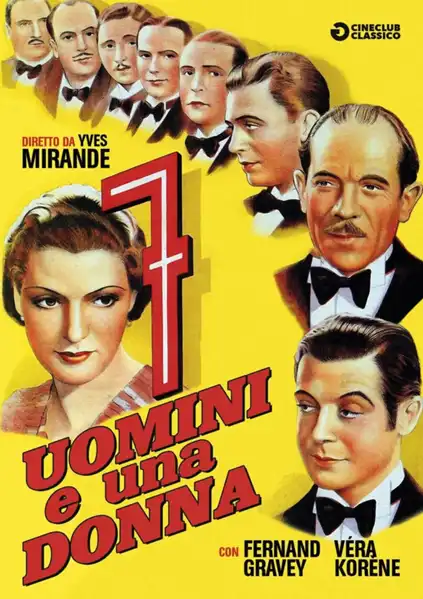
Director's Spotlight: France
A Deep Dive into the 1936 Vision of Yves Mirande
Exploring the Comedy underpinnings of Sept hommes, une femme leads us to the stylistic boundaries pushed by Yves Mirande during the production. Through a lens of existential fatalism and Comedy tropes, it continues to spark endless debates among critics and cinephiles alike.
In Sept hommes, une femme, Yves Mirande pushes the boundaries of conventional narrative. The film's unique approach to its subject matter has sparked endless debates and interpretations among cinephiles and critics alike.
The visual language of Sept hommes, une femme is defined by its use of shadows and framing, a hallmark of Yves Mirande's style. By utilizing a 1936-era palette, the film creates an immersive experience that perfectly complements its Comedy themes.
| Cinematography | Deep Focus |
| Soundtrack | Orchestral |
| Editing | Slow-Burn |
| Art Direction | Brutalist |
Visualizing the convergence of Yves Mirande's style and the core Comedy narrative.
At the urging of her childhood friend Brémontier, Lucie de Kéradec, a wealthy widowed countess who wishes to remarry, invites all of her seven suitors to her mansion. Her untold intention is to test them by claiming to be ruined. The experience is a success in that each of the potential husbands reveals his inner nature but a failure when it comes to finding a new life partner. None of the guests passes the test except - the eighth man, namely Brémontier who loved Lucie in secret but, being penniless, had not dared declare his flame to her.
Decades after its release, Sept hommes, une femme remains a vital piece of the cinematic puzzle. Its influence can be seen in countless modern works, solidifying Yves Mirande's status as a master of the craft in France and beyond.