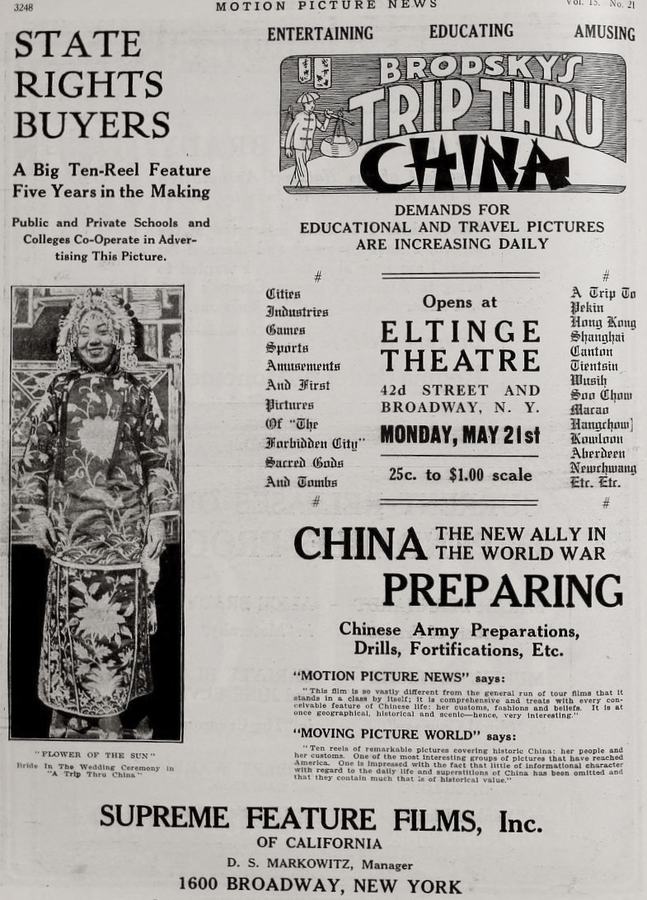
Documentary on the then-new Chinese Republic, taken over a ten-year period. Footage includes races at Shanghai, imperial ceremonies at the national Temple of Heaven, scenes of the destruction caused by the typhoon of 1914, and the installation of government officials at the Peking palaces.
United States
Stepping back into the annals of early 20th-century cinema often feels akin to archaeological excavation, unearthing forgotten artifacts that whisper tales of bygone eras. Yet, some discoveries resonate with an almost startling immediacy, transcending their age to offer profound insights into humanity's enduring journe...

Community
Log in to comment.
"Stepping back into the annals of early 20th-century cinema often feels akin to archaeological excavation, unearthing forgotten artifacts that whisper tales of bygone eras. Yet, some discoveries resonate with an almost startling immediacy, transcending their age to offer profound insights into humanity's enduring journey. Benjamin Brodsky's 'A Trip Through China' is precisely such a cinematic relic, a monumental documentary that, despite its venerable age, pulses with the vibrant, turbulent spiri..."