DbcultAccessing Vault...
Cult Review
Senior Film Conservator
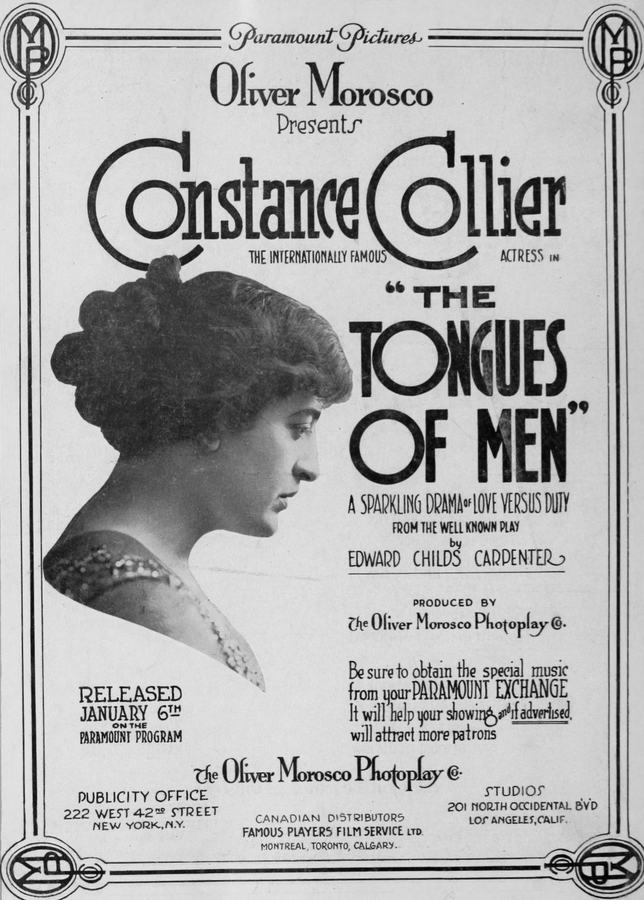
Ah, the early 20th century. A time when societal mores were as rigid as a starched collar, and the burgeoning art of cinema often served as a fascinating mirror, reflecting both the anxieties and the evolving consciousness of an era. Into this landscape steps 'The Tongues of Men' (1916), a film that, even a century later, still resonates with a certain piquancy, a delightful dramatic tension born from the clash of the sacred and the profane, the unyielding and the flamboyant. Directed with an eye for dramatic irony and penned by Edward Childs Carpenter, this silent-era gem is far more than a simple morality play; it's a nuanced exploration of perception, prejudice, and the surprising pathways to human understanding.
At its heart lies the formidable figure of Rev. Dr. Penfield Sturgis, portrayed with a captivating blend of earnestness and burgeoning self-doubt by Forrest Stanley. Sturgis is not merely a man of God; he is a man of his time, steeped in the prevailing moral absolutism that often viewed artistic expression, particularly anything as sensuous as grand opera, with suspicion. His pulpit at St. Martins-in-the-Lane is his fortress, his sermons his weapons against perceived societal decay. When he denounces 'Zaporah,' an opera featuring the celebrated prima donna Jane Bartlett, it's not just a critique; it's a public damnation, a pronouncement from on high that seeks to guide, if not control, the moral compass of his flock.
But what Sturgis fails to account for is the formidable will of Jane Bartlett, embodied with magnificent theatricality by Constance Collier. Bartlett is no shrinking violet, no demure artist to be cowed by ecclesiastical pronouncements. She is a force of nature, an artist whose very livelihood and reputation have been assailed. Her entrance into Sturgis's vestry room is an act of audacious defiance, a direct challenge to his authority. Her demand – that he 'eat his sermon word for word' – is not just a plea for vindication; it's a declaration of war, a demand for personal and artistic respect. This initial confrontation, a masterclass in silent film's ability to convey powerful emotion through gesture and expression, sets the stage for a dramatic dance between two seemingly irreconcilable worlds.
The ensuing 'acquaintance' is born of a fascinating cocktail of motives. Bartlett, driven initially by a thirst for vindication, sees Sturgis as a project, a challenge to her considerable charm and influence. Sturgis, on the other hand, is drawn not just by a sense of duty to his church, but perhaps by a nascent, unacknowledged curiosity about the very world he so vehemently condemns. He is, after all, a scholar of human nature, albeit one viewed through the narrow lens of doctrine. This dynamic echoes, in a way, the intricate psychological games and societal pressures observed in films like The Student of Prague, where internal and external forces conspire to reshape an individual's destiny. Both films delve into the consequences of rigid adherence to a path, whether it be moral or self-serving, and the inevitable reckoning that follows.
Sturgis's reluctant visit to 'Zaporah' is a pivotal moment. The film masterfully portrays his internal struggle: his initial convictions are indeed deepened, the perceived 'immorality' of the opera perhaps even more stark when witnessed firsthand. Yet, something else begins to stir within him. It's not a sudden conversion, but a slow, almost imperceptible shift in perspective. He starts to see beyond the painted backdrops and the dramatic gestures, to the human spirit animating them. He discovers a 'surprising humanity' in Bartlett herself, a depth that his rigid moral framework had previously rendered invisible. This journey of discovery, where preconceived notions are challenged by direct experience, is a timeless narrative, and 'The Tongues of Men' handles it with admirable subtlety for its era.
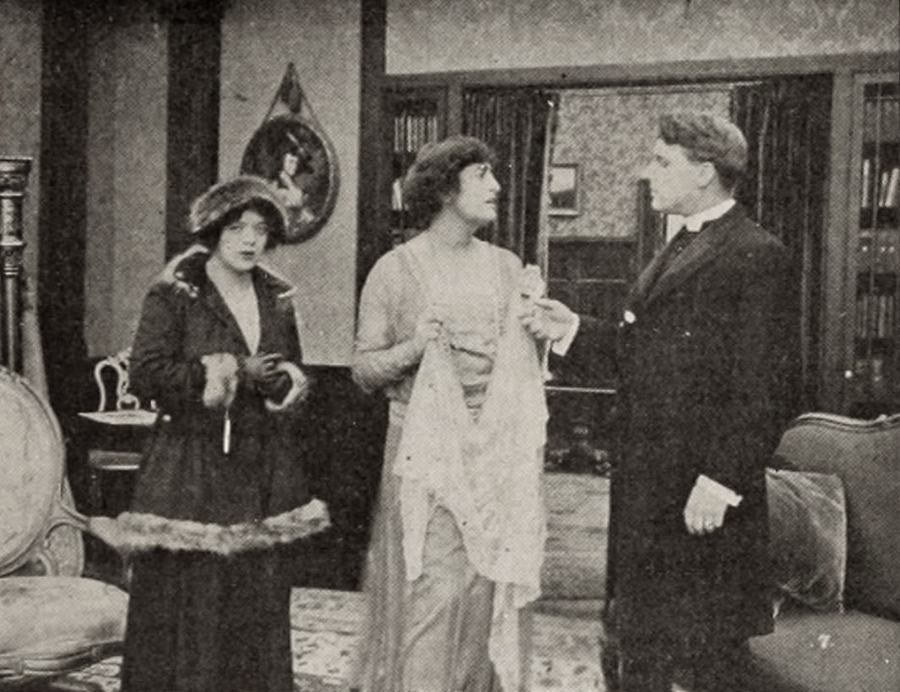
The irony, of course, is deliciously potent. Just as Sturgis begins to question the absolutism of his own judgment, to wonder if he takes himself 'a shade too seriously,' the external world catches up. Word arrives that the Mayor, acting on the very strength of Sturgis's condemnatory sermon, has closed 'Zaporah.' It's a moment of profound realization, a stark illustration of the unintended consequences of his words. The power of the pulpit, wielded with such conviction, has now caused tangible harm, not just to Bartlett's career, but to the livelihoods of countless others involved in the production. This sudden, almost karmic, blow forces Sturgis into a crisis of conscience. His repentance is not merely intellectual; it is deeply felt, a recognition of his own role in a wider chain of events.
His decision to apologize publicly, in an open letter to the newspapers, is an act of immense courage and humility. For a man of his standing, in that societal climate, to recant a sermon was tantamount to professional suicide. The uproar from his vestry and congregation is entirely predictable, yet powerfully depicted. They are not merely perturbed; they are 'up in arms,' their moral order threatened by the ascendancy of the 'Bartlett woman.' This segment of the film brilliantly showcases the rigid social structures and the fear of scandal that pervaded early 20th-century communities. The performances of Charles Marriott and John McKinnon, likely as members of the indignant vestry, would have conveyed the palpable shock and outrage of a community whose moral certainty has been shaken.
The marriage proposal, then, arrives as a dramatic crescendo, a seemingly desperate act born of a complex mix of chivalry, guilt, and perhaps a burgeoning, if unacknowledged, affection. Sturgis offers to marry Bartlett, ostensibly 'to preserve her dignity,' but in doing so, he finally, irrevocably, 'eats his sermon word for word.' It's a symbolic capitulation, a profound acceptance of the human messiness that his earlier dogmatism had so vehemently rejected. Bartlett's acceptance is equally complex; it’s not necessarily a declaration of love, but a triumph, the ultimate vindication of her initial challenge. Helen Marlborough and Helen Jerome Eddy, though not central to this pivotal scene, likely contributed to the film's ensemble, portraying characters who would react to this scandalous union with varying degrees of shock or quiet understanding, further enriching the social tapestry.
But the narrative doesn't end with this dramatic flourish. Edward Childs Carpenter's screenplay, with its keen understanding of human nature, adds another layer of unexpected grace. Having achieved her objective, her 'vanity appeased,' Jane Bartlett reveals a final, surprising act of generosity. She orchestrates a reconciliation between Sturgis and Georgine Darigal, the daughter of the rector emeritus and Sturgis's former fiancée. This act elevates Bartlett beyond mere vindictiveness, revealing a character capable of profound empathy and selflessness. It transforms her from an antagonist into a catalyst for growth, a figure who, having challenged the system, ultimately seeks harmony. Lamar Johnstone, Betty Burbridge, and Herbert Standing, in their supporting roles, would have contributed to the film’s portrayal of the entangled relationships and the societal pressures that often dictated personal choices in this era.
As a silent film, 'The Tongues of Men' relies heavily on visual storytelling, expressive performances, and well-crafted intertitles to convey its intricate plot and emotional nuances. The actors, particularly Collier and Stanley, would have utilized the exaggerated yet precise gestures and facial expressions characteristic of the era to communicate internal turmoil, defiance, and evolving understanding. The blocking and staging of scenes, from the intimate confrontation in the vestry to the public outcry of the congregation, would have been meticulously planned to maximize dramatic impact. The use of close-ups, though perhaps less frequent than in later cinema, would have been strategically employed to emphasize key emotional moments, allowing the audience to connect directly with the characters' inner lives. The visual language of the film, in its simplicity, often achieves a profound resonance, inviting viewers to engage actively in interpreting the unspoken.
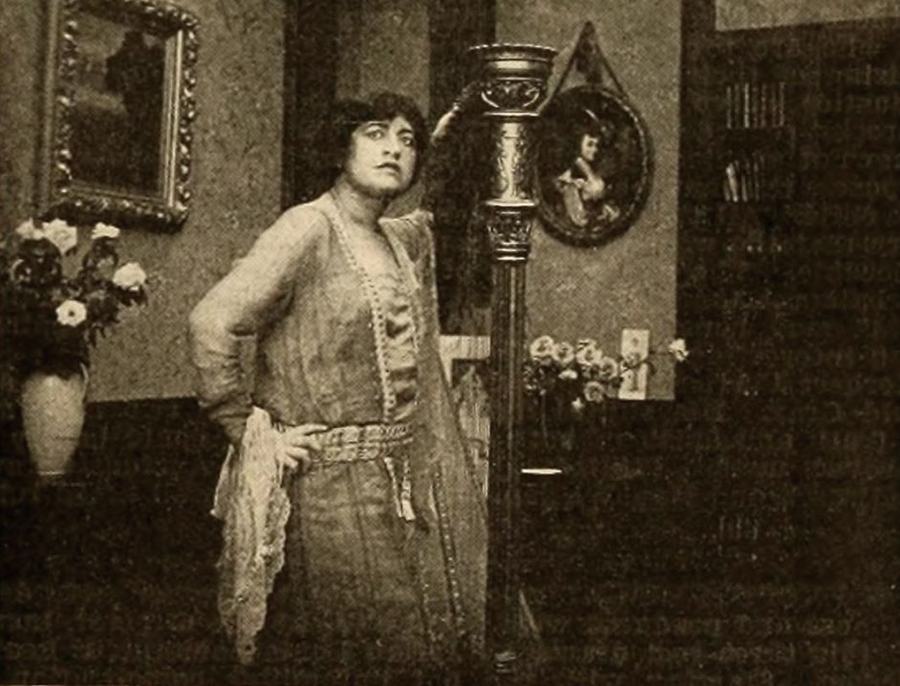
Edward Childs Carpenter's screenplay is the backbone of this compelling drama. He deftly constructs a narrative that, while rooted in a straightforward conflict, blossoms into a multifaceted exploration of morality, forgiveness, and the human capacity for change. The pacing, crucial in silent cinema, would have balanced moments of intense dialogue (via intertitles) with sequences of purely visual action and reaction, guiding the audience through Sturgis's transformation without ever feeling rushed or underdeveloped. The character arcs, especially that of Sturgis, are remarkably sophisticated for a film of this period, moving beyond simplistic good-versus-evil dichotomies to embrace the complexities of personal growth and societal pressure. This nuanced approach to character development sets it apart from many contemporary films, which often leaned more heavily on archetypes. One might even draw a parallel to the intricate web of personal and political struggles depicted in Civilization, though that film tackled grander humanitarian themes, both demonstrate an ambition to explore deeper societal currents through their narratives.
The themes embedded within 'The Tongues of Men' are remarkably enduring. It questions the very nature of judgment: can one truly condemn an artistic work without understanding the human spirit that creates it? It explores the dangers of self-righteousness and the redemptive power of humility. Sturgis's journey is one from rigid adherence to dogma to a more compassionate, nuanced understanding of faith and humanity. Bartlett, initially a figure of vengeance, evolves into an agent of reconciliation, demonstrating that even those perceived as 'scandalous' can possess profound moral clarity. The film subtly critiques the hypocrisy of a society that prioritizes outward appearances and rigid moral codes over genuine empathy and understanding. This thematic richness is what elevates the film beyond a mere historical curiosity, making it a relevant piece for discussion even today.
In an era when cinema was still finding its voice, 'The Tongues of Men' dared to explore complex moral territory with a surprising degree of sophistication. It avoids easy answers, instead opting for a resolution that, while dramatic, feels earned through the characters' evolving understanding of themselves and each other. The film’s strength lies not just in its compelling plot, but in its ability to humanize its characters, revealing their flaws and their potential for growth. It reminds us that judgment, particularly from a position of authority, carries immense weight and often unforeseen consequences. The idea of public figures being forced to confront the fallout of their pronouncements is a timeless one, making the film feel surprisingly contemporary in its relevance.
The performances, particularly from Constance Collier as the indomitable Jane Bartlett and Forrest Stanley as the conflicted Rev. Dr. Sturgis, would have been central to the film's success. Their ability to convey such intricate emotional shifts without spoken dialogue is a testament to the power of silent acting. The chemistry between them, evolving from antagonism to a grudging respect and ultimately a profound understanding, is the engine that drives the narrative. Even the supporting cast, including Lydia Yeamans Titus, would have contributed to the vibrant, if sometimes judgmental, community that forms the backdrop for this drama. The film's careful construction of its world, both the grand opera stage and the austere church, serves to highlight the stark contrasts that drive the story.
Ultimately, 'The Tongues of Men' is a testament to the power of cinema as a medium for social commentary and personal reflection. It challenges its audience to look beyond surface appearances, to question their own prejudices, and to recognize the shared humanity that binds us all, regardless of our differing convictions. It's a reminder that true wisdom often begins when we are willing to admit that we might, just might, take ourselves 'a shade too seriously.' For enthusiasts of early cinema, or anyone interested in the enduring power of narrative to explore complex moral quandaries, this film remains a compelling and thought-provoking experience, a silent voice that still resonates with profound truths about the human condition.
It stands as a fascinating counterpoint to films that might have offered simpler heroics or more straightforward villainy. Instead, it presents a world where even the most dogmatic can find redemption and where the most outwardly flamboyant can harbor deep wells of grace. The film's title itself, hinting at the myriad ways humans communicate, miscommunicate, and ultimately connect, is perfectly apt. It underscores the idea that words, whether from a pulpit or an opera stage, carry immense power, but true understanding often transcends them. In a cinematic landscape that was still defining itself, 'The Tongues of Men' carved out a niche for intelligent, emotionally resonant storytelling that continues to captivate those willing to listen to its silent, eloquent voice.

IMDb —
1919
Community
Log in to comment.